
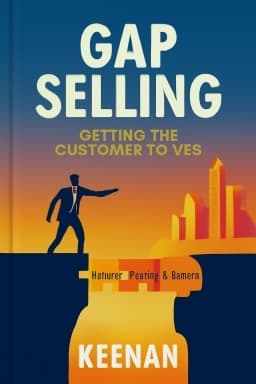
From Objections to Opportunities: Turning 'No' Into 'Yes' with Gap Selling
How the Best Sellers Use Objections to Build Trust and Close Bigger Deals

How the Best Sellers Use Objections to Build Trust and Close Bigger Deals
Objections are the moments when most sellers freeze, fumble, or fold. But what if every objection was actually a gift—a chance to get closer to your buyer and close a bigger, better deal? Gap Selling turns traditional objection handling on its head. Instead of seeing objections as barriers, top sellers view them as signposts: clues to where their understanding or alignment with the buyer is incomplete.
The process begins with curiosity, not defensiveness. When a buyer says, 'It’s too expensive,' the Gap Seller doesn’t rush to discount. Instead, they ask, 'Can you help me understand what you’re comparing the price to?' or 'What would make this investment worthwhile for you?' This shifts the conversation from cost to value, and from price to impact. The seller uses the discovery work they’ve done to anchor the negotiation in the size and urgency of the gap: the real, quantifiable cost of the buyer’s current state.
The blog provides scripts and examples for handling common objections—price, timing, authority, and more. It explains how to use the buyer’s own words and data to reinforce the value of change, and how to customize demos to address only the problems that matter most. By the end, readers will see that objections are not the end of the road, but the beginning of deeper trust and bigger deals.
For more on mastering objections with Gap Selling, check out these resources: 1 2 4
Want to explore more insights from this book?
Read the full book summary