
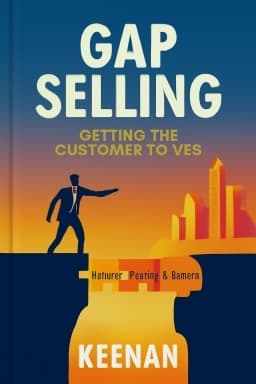
The Hidden Power of the Gap: How to Sell What Buyers Actually Want
Unlocking Buyer Motivation with Gap Selling’s Problem-Centric Approach

Unlocking Buyer Motivation with Gap Selling’s Problem-Centric Approach
Why do some deals seem to close themselves, while others stall for months or vanish without warning? The answer lies in the psychology of buying—and Gap Selling holds the key. At its heart, Gap Selling is about understanding what truly motivates buyers: the desire to solve a problem and reach a better place. Most sellers make the mistake of talking about their product, but buyers don’t care about features—they care about escaping pain and achieving goals.
The process starts with discovery—a conversation where the seller asks questions that go far beyond 'What’s your budget?' or 'When do you want to buy?' Instead, the best questions dig into the buyer’s world: 'What’s not working today?' 'How does this problem impact your business or life?' 'What would success look like for you?' As the buyer opens up, the seller listens carefully, mapping out the current state (the pain), the desired future state (the goal), and the gap between them (the opportunity).
Gap Selling’s magic is in its ability to quantify the gap. Sellers learn to put real numbers to the problem: lost revenue, wasted time, missed opportunities, or even emotional stress. This makes the cost of inaction painfully clear and the value of change irresistible. Instead of pushing a product, the seller becomes a guide—helping the buyer see the journey from pain to possibility.
Real-world examples prove the power of this approach. Companies that adopt Gap Selling see deals close faster and at higher prices, because buyers feel understood and empowered—not pressured. The blog shares tips for building trust in discovery calls, using the buyer’s own words to build urgency, and crafting proposals that speak directly to what matters most. The result? More closed deals, happier customers, and a reputation as a problem-solver, not a peddler.
To learn more about the psychology behind Gap Selling and how to master the art of discovery, visit these resources: 1 2
Want to explore more insights from this book?
Read the full book summary