
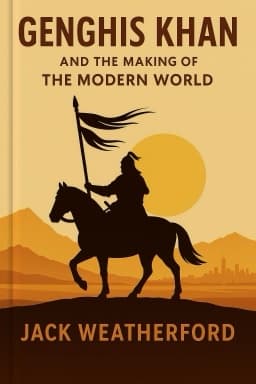
Beyond Conquest: How the Mongol Empire Revolutionized Governance and Global Trade
Learn how the Mongols built an empire that not only conquered but also connected and governed with unprecedented efficiency.

The Mongol Empire’s brilliance extended far beyond its military victories. Its governance model was revolutionary, with laws applied equally to all, including the Great Khan himself. This commitment to justice and order was rooted in the belief in the Eternal Blue Sky, a divine mandate that bound ruler and subject alike.
Religious Tolerance and Cultural Harmony
The Mongols practiced remarkable religious tolerance, allowing Buddhism, Islam, Christianity, and native shamanistic beliefs to coexist peacefully. This policy reduced resistance and fostered a vibrant cultural mosaic within the empire.
The Yam Postal Relay System
To govern their vast territories, the Mongols developed the yam system—a network of relay stations providing fresh horses and supplies to couriers. This allowed messages and orders to travel swiftly across thousands of miles, maintaining cohesion and responsiveness.
The Pax Mongolica and Global Trade
Under Mongol protection, the Silk Roads were revived and secured, ushering in the Pax Mongolica—a period of relative peace and stability that encouraged trade and cultural exchange. Goods like silk, spices, and precious metals flowed freely, alongside ideas, religions, and technologies such as printing and gunpowder, which traveled from East to West, profoundly influencing world history.
The Mongol Empire thus served as a bridge connecting diverse civilizations, fostering economic integration and cultural diffusion on a scale previously unseen.
Explore more on Mongol governance and trade at the Metropolitan Museum and Diplomacy.edu resources. 1 2
Want to explore more insights from this book?
Read the full book summary