
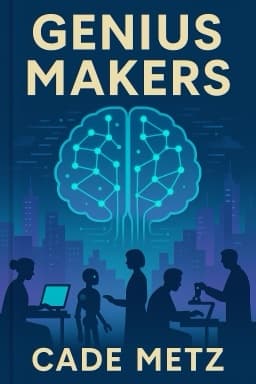
From Perceptrons to Superintelligence: The Untold Story of AI’s Rise
Discover the fascinating journey of AI from its humble beginnings to the cutting-edge deep learning revolution reshaping our world today.

Artificial Intelligence (AI) has captivated human imagination for decades, promising machines that can think, learn, and perhaps even surpass human intelligence. But the path to today’s AI marvels was neither straight nor smooth. It began in the 1950s with the invention of the Perceptron, an early neural network designed to mimic the brain’s neurons. This bulky machine, resembling a refrigerator, was capable of learning to recognize simple patterns, igniting excitement about the dawn of thinking machines.
Despite the initial hype, the Perceptron faced fundamental limitations. It struggled with simple logical problems like the exclusive-or task, leading to harsh criticism from leading AI researchers. This critique triggered the AI winter, a period of diminished funding and interest that lasted nearly 15 years. Yet, the idea that machines could learn from data never disappeared — it merely went underground.
In the 1980s, a mathematical breakthrough called backpropagation revived neural networks by enabling multilayer models to adjust their internal connections efficiently. Coupled with the advent of GPUs, hardware originally designed for rendering video games, researchers could finally train deep neural networks on large datasets. This synergy sparked a renaissance in AI research, leading to rapid advances in speech recognition, image analysis, and autonomous systems.
The competition among tech giants intensified as companies like Google, Baidu, Microsoft, and Facebook raced to acquire talent and startups, investing billions to lead the AI frontier. This high-stakes rivalry accelerated innovation but also raised important ethical concerns. Incidents of AI bias in facial recognition and the rise of AI-powered surveillance sparked public outcry, highlighting the need for responsible development and fairness.
Beyond these challenges lies the ambitious goal of Artificial General Intelligence (AGI) — machines possessing broad, human-like cognitive abilities. While progress in specialized AI continues at breakneck speed, AGI remains a distant and debated horizon, raising profound philosophical and ethical questions.
Ultimately, AI’s story is as much about the humans behind the machines — their values, culture, and vision — as it is about algorithms and data. The future of AI depends on fostering diversity, ethical reflection, and collaboration to ensure technology benefits all. This remarkable journey from perceptrons to superintelligence continues to unfold, promising both incredible opportunities and complex challenges.
For those fascinated by the interplay of technology, society, and the future, this story offers rich lessons and inspiration.
Want to explore more insights from this book?
Read the full book summary