
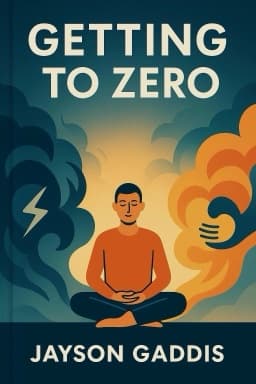
The Hidden Brain Secrets Behind Conflict: How 'Getting to Zero' Unlocks Emotional Mastery
Explore the neuroscience of conflict and practical ways to master your emotional reactions for better relationships.

Why do we sometimes lose control in arguments, saying or doing things we later regret? The answer lies deep in our brain’s architecture, as revealed in Jayson Gaddis’ insightful book 'Getting to Zero.' This book shines a light on the ancient parts of our brain that drive our emotional reactivity and offers practical tools to master these powerful forces.
The 'scared animal' brain, located in the brainstem and limbic system, is designed to protect us from immediate danger. When it perceives a threat—often triggered by relational stress—it activates fight, flight, or freeze responses. This activation floods the body with stress hormones, narrowing our focus and shutting down the logical prefrontal cortex.
Early attachment experiences shape how well our brain can regulate these responses. Secure attachments promote healthy development of emotional regulation, while insecure or traumatic experiences can leave us more vulnerable to overwhelm.
To navigate this, the book introduces the trigger scale, a simple yet powerful tool to assess emotional activation from calm (0) to overwhelmed (10). Staying below 5 helps maintain access to rational thought and empathy.
Mindfulness practice, specifically the NESTR meditation, helps increase tolerance for difficult emotions. By observing Number, Emotion, Sensation, Thoughts, and Resource, we learn to stay present and avoid being hijacked by the scared animal brain.
Communication frameworks like LUFU and SHORE complement this work by fostering empathetic listening and honest speaking, essential for repairing relational ruptures.
Finally, clear agreements between partners act as a scaffold to maintain safety and trust, reducing the frequency and intensity of conflicts.
By understanding the neuroscience behind conflict and applying these tools, you can transform your emotional reactivity into emotional mastery, paving the way for deeper, more fulfilling relationships.
Want to explore more insights from this book?
Read the full book summary