
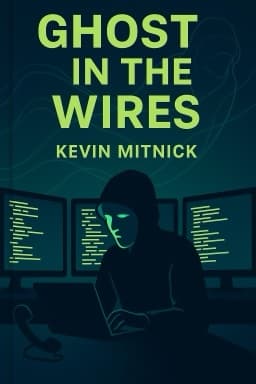
The Dark Side of Hacking: Kevin Mitnick’s Life on the Run and Legal Battles
What It Takes to Evade the Law and the Consequences That Follow

Living as one of the most wanted hackers in history, Kevin Mitnick’s existence was a continuous game of shadows. Evading capture required more than technical skill; it demanded mastery of identity fabrication and communication anonymity. Using stolen birth certificates, forged licenses, and fake social security numbers, Mitnick created multiple personas to access bank accounts, rent apartments, and work under aliases.
Technological tricks like cell phone cloning allowed him to mask his location and avoid electronic tracking by reprogramming phones with legitimate electronic serial numbers. This combination of psychological and technical evasion tactics kept him one step ahead of law enforcement for years.
However, Mitnick’s capture opened a new chapter filled with legal complexities. His diagnosis as addicted to hacking introduced a novel perspective, treating cybercrime as a behavioral disorder rather than purely criminal intent. This challenged the legal system to balance punishment with rehabilitation.
Controversies also emerged regarding evidence obtained through wiretaps and unauthorized surveillance, raising important questions about privacy rights and due process in the digital era. These issues highlighted the difficulties courts face when applying traditional laws to rapidly evolving technology.
Mitnick’s trials became media spectacles, shaping public perceptions of hackers as either villains or folk heroes. The legal battles underscored the need for updated legislation and thoughtful policies to address cybercrime effectively while respecting civil liberties.
Ultimately, Mitnick’s story reveals the profound human cost of living on the run and the complex interplay between technology, psychology, and law. It serves as a cautionary tale and a call for balanced approaches to cybersecurity and justice.
Sources: Canecto.com review, CyberInfoBlog review, Kiledjian.com analysis 1 3 4
Want to explore more insights from this book?
Read the full book summary