
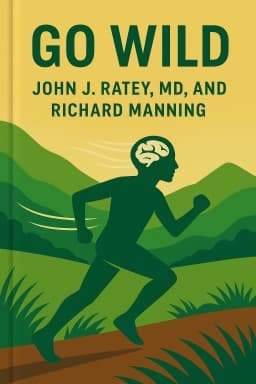
Unlocking the Secrets of Your Body: How Evolution Explains Modern Diseases and What You Can Do About It
Discover why your body struggles in the modern world and how understanding evolution can help you reclaim your health.

Have you ever wondered why, despite all the advances in medicine and technology, chronic illnesses like type 2 diabetes, heart disease, obesity, and autoimmune disorders are on the rise? The answer lies not just in genetics or luck but in a profound mismatch between the environment we evolved in and the world we live in today.
Our story begins millions of years ago in the wild landscapes where early humans developed unique adaptations that made us exceptional endurance runners, social creatures, and omnivores. These adaptations shaped not only our bodies but also our brains, wiring us for movement, empathy, and cooperation.
Endurance running was not a leisure activity but a survival strategy. Our springy arched feet, long Achilles tendons, and efficient thermoregulation allowed us to track and exhaust prey in persistence hunts. Alongside this physical prowess, specialized neurons—mirror and spindle neurons—enabled us to feel and understand others’ emotions deeply, fostering trust and social cohesion essential for raising vulnerable infants who required prolonged care.
Fast forward to the modern era, where the rise of agriculture introduced dense carbohydrates and sedentary living, setting the stage for metabolic diseases. Today, our diets are flooded with refined sugars and processed foods, overwhelming our bodies’ delicate glucose regulation mechanisms. Insulin, the hormone tasked with controlling blood sugar, becomes overworked, leading to insulin resistance—a hallmark of metabolic syndrome and type 2 diabetes.
Movement, once a necessity for survival, has been replaced by sedentary lifestyles. Yet, physical activity remains crucial not only for muscle health but for brain function. Exercise stimulates brain-derived neurotrophic factor (BDNF), promoting neurogenesis and cognitive resilience. Natural, varied movement—running, climbing, jumping—engages multiple systems and supports emotional well-being, especially when done socially, releasing oxytocin, the bonding hormone.
Sleep and mindfulness are equally vital. Human sleep evolved in social contexts with natural environmental cues. Modern disruptions—artificial light, isolation—impair restorative processes, increasing inflammation and metabolic dysfunction. Mindfulness meditation enhances brain synchrony and reduces anxiety, complementing the healing power of quality rest.
Our innate connection to nature, or biophilia, further supports immune function and reduces stress. Urban living often deprives us of this essential contact, contributing to 'nature deficit disorder.' Reintroducing nature through walks, gardening, or simply viewing greenery can restore balance.
Social bonds are the glue of health. Oxytocin fosters trust and cooperation, while loneliness increases inflammation and mortality risk. Understanding the dual nature of tribalism helps us navigate social complexities and cultivate broader harmony.
The vagus nerve, a master regulator of parasympathetic responses, links heart, gut, and brain, modulating stress and digestion. Gut health, through the microbiome, influences mood and cognition, highlighting the intertwined nature of body and mind.
Rewilding your life means integrating these evolutionary insights into practical steps: adopting a nutrient-dense, low-sugar diet; engaging in varied natural movement; prioritizing sleep and mindfulness; nurturing social connections; and spending time in nature. Small, consistent changes can yield profound health benefits, especially when supported by community.
Ultimately, epigenetics shows us that our lifestyle choices influence gene expression, meaning we hold the power to shape our health destiny. Embracing the wild within and around us offers a hopeful vision for a future where biology and environment harmonize to foster vitality and longevity.
This journey is not just about avoiding disease but about reclaiming the joy of being fully human—moving freely, connecting deeply, and living in tune with the natural world.
Are you ready to unlock the secrets of your body and embark on this transformative path?
Want to explore more insights from this book?
Read the full book summary