
Unlock the Hidden Power of Personality: Why Emotional Intelligence Isn’t Enough
Discover the surprising truth about emotional intelligence and how understanding stable personality traits can transform your relationships and decisions.

For years, emotional intelligence has been touted as the secret sauce behind successful leadership, thriving relationships, and personal fulfillment. We’ve heard it’s about empathy, social skills, and managing feelings. But what if this popular notion misses a crucial piece of the puzzle? What if the emotions we so carefully tune into are just the surface ripples on a much deeper ocean of personality?
Emotions, as powerful as they feel in the moment, are chemically transient. Scientific studies reveal that emotional responses typically last less than ninety seconds before fading. This ephemerality means emotions are unreliable predictors of how someone will behave in the long term. In contrast, personality traits are like the bedrock beneath those waves—stable, enduring patterns that shape our thoughts, feelings, and actions consistently over decades.
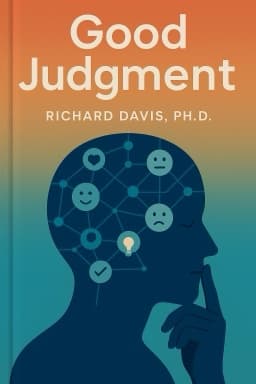
Richard Davis, Ph.D., a leading expert in personality science, challenges the prevailing emphasis on EQ by highlighting its scientific limitations. Much of what is marketed as emotional intelligence blends abilities with ingrained traits, muddying its predictive power. Instead, Davis introduces the 'personality blueprint,' a framework that organizes human character into five essential dimensions: Intellect, Emotionality, Sociability, Drive, and Diligence.
Each dimension captures a distinct aspect of personality. Intellect reflects thinking styles, from analytical to creative. Emotionality reveals how feelings are experienced and expressed. Sociability covers social engagement and communication preferences. Drive uncovers motivations and values, while Diligence shows how individuals execute tasks and manage discipline.
By focusing on these stable traits rather than fleeting emotions, we gain a more accurate lens for predicting behavior, making better decisions, and building meaningful connections. For example, a leader choosing a team member will benefit more from understanding conscientiousness and emotional stability than from momentary displays of warmth or confidence.
In essence, good judgment arises not from reading moods but from perceiving the enduring character beneath them. This shift transforms how we approach relationships, hiring, and leadership.
Ready to move beyond emotional intelligence? Let’s dive deeper into the personality blueprint and learn how to apply it in everyday life.
Sources: 1 , 2 , 3
Want to explore more insights from this book?
Read the full book summary