
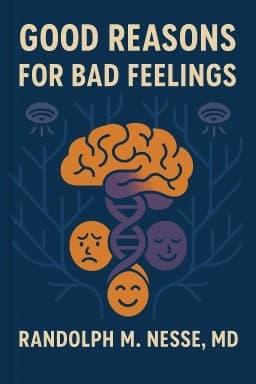
Unlocking the Mystery of Anxiety: Why Your Brain’s Alarm System Sometimes Goes Haywire
Learn how anxiety evolved as a protective mechanism, why it often overreacts, and how modern therapies can retrain your brain’s alarm system.

Anxiety is often misunderstood as a mere flaw or weakness, but evolutionary psychiatry reveals it as one of the brain’s most important protective systems. Imagine a smoke detector that goes off at the slightest hint of smoke—even burnt toast—to prevent the devastating consequences of a real fire. Anxiety works the same way.
Our ancestors faced threats from predators, hostile environments, and social dangers. Anxiety evolved to detect these threats early, triggering fight-or-flight responses. However, this system is tuned to produce many false alarms because missing a real threat could be fatal. This ‘smoke detector’ principle explains why many anxious feelings feel excessive or irrational.
Today, about 30% of people experience diagnosable anxiety disorders, yet stigma and misunderstanding often keep these struggles hidden. Disorders such as social anxiety, phobias, generalized anxiety, and panic disorder reflect different expressions of this protective mechanism malfunctioning or becoming chronic.
Fortunately, exposure therapy offers a powerful tool to retrain the brain’s anxiety circuits. By gradually and safely confronting feared objects or situations, patients learn that their anxiety alarms are often false. This process rewires neural pathways, reducing fear and avoidance behaviors. Many patients experience rapid and lasting improvement, reclaiming lives once dominated by fear.
Understanding anxiety as an evolved system rather than a defect transforms how we approach treatment and self-care. It encourages compassion, patience, and evidence-based therapies that restore balance.
By embracing the evolutionary origins of anxiety, we gain not only scientific insight but also hope. Anxiety’s alarms, though sometimes overwhelming, are reminders that our brains are working hard to keep us safe. With the right tools and understanding, we can quiet unnecessary alarms and live fuller, freer lives.
Want to explore more insights from this book?
Read the full book summary