
Unlocking the Secrets of 10X Success: How 'Good to Great' Transforms Ordinary into Extraordinary
Discover the timeless principles that separate good companies from truly great ones and how you can apply them to your own journey.

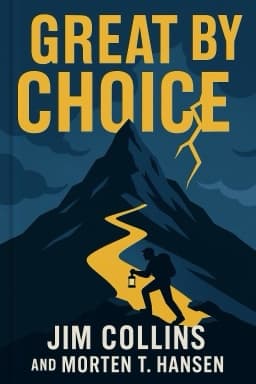
In a world where uncertainty is the only constant, what separates companies that merely survive from those that thrive spectacularly? The answer lies in the profound research presented in Jim Collins' landmark book, Good to Great. This isn't a tale of luck or fleeting trends; it is a blueprint for mastering your fate amid chaos.
The journey begins with the concept of the '10Xers' — companies that outperform their peers by at least ten times over decades. Imagine investing $10,000 in such a company in 1972 and watching it grow to over $6 million by 2002, dwarfing general market returns. Southwest Airlines, for example, turned a modest investment into nearly $12 million despite relentless industry turmoil. How do they achieve this? By rejecting fatalism and embracing full responsibility for their outcomes, these companies operate with what Collins calls Level 5 Leadership — a paradoxical blend of fierce ambition and profound humility.
At the heart of their success is a triad of behaviors: fanatic discipline, empirical creativity, and productive paranoia. Fanatic discipline is the relentless commitment to consistent performance, exemplified by the '20 Mile March' — a metaphor for steady, self-imposed progress regardless of external conditions. Companies like Stryker commit to 20% net income growth annually, not as a vague aspiration but as a non-negotiable law, building resilience and confidence through repetition.
Empirical creativity tempers bold innovation with rigorous testing. The principle 'fire bullets, then cannonballs' urges organizations to conduct low-risk experiments before committing major resources. A biotech firm’s success with erythropoietin came after numerous small experiments, while others who made untested big bets faced ruin.
Productive paranoia means maintaining a vigilant awareness of threats and preparing buffers against catastrophe. Intel’s massive cash reserves and Southwest’s consistent profitability through crises showcase this mindset. These leaders balance urgency and patience, zooming in and out to avoid blind spots.
These principles are codified in durable operating recipes called SMaC (Specific, Methodical, and Consistent). Southwest Airlines’ 10-point recipe guides every decision, providing clarity and focus while allowing empirical amendments over time. This balance prevents chaos and supports sustained excellence.
Luck, often misunderstood, plays a role but is neither destiny nor excuse. Both great and average companies face similar luck; the difference lies in preparation and response. Leaders who build buffers and adapt swiftly turn luck into an advantage rather than a random event.
Ultimately, Good to Great teaches us that greatness is not a mystical trait but a human quest achievable through disciplined, empirical, and vigilant leadership. It is a call to action to create your own future, embracing paradox and uncertainty with purpose and resilience.
Whether you lead a business, a nonprofit, or your own life journey, these timeless lessons empower you to move beyond good and step into greatness.
Want to explore more insights from this book?
Read the full book summary