
From Marshes to Mansions: How Setting Shapes Destiny in Great Expectations
Why Pip’s World Is as Important as the People in It

Why Pip’s World Is as Important as the People in It
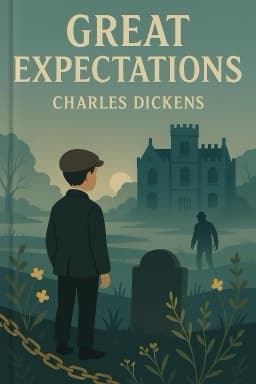
Charles Dickens was a master at bringing places to life, and in Great Expectations, setting is destiny. The novel opens on the wild marshes, a landscape of isolation and vulnerability that mirrors Pip’s state of mind. The mist, the river, the distant lights—all evoke a sense of longing and uncertainty. As Pip moves from the marshes to Satis House, he enters a world frozen in time, where heartbreak and decay are palpable in every cobweb and stopped clock.
Satis House is more than a mansion; it is a mausoleum of lost dreams. Miss Havisham’s refusal to move on from her betrayal is reflected in the crumbling walls and faded grandeur. The house becomes a character in its own right, shaping the destinies of Pip, Estella, and even Miss Havisham herself.
London, with its teeming crowds and endless possibilities, represents both opportunity and temptation. Pip’s adventures in the city are marked by excitement and confusion, as he navigates the labyrinth of social ambition and moral ambiguity. The contrast between the simplicity of the village and the complexity of the city underscores the novel’s central tension between innocence and experience.
Throughout Great Expectations, Dickens uses setting as a tool for emotional and psychological exploration. The places Pip inhabits are physical manifestations of his fears, hopes, and regrets. By the novel’s end, the return to the countryside signifies not just a homecoming, but a spiritual renewal. The settings remind us that where we are shapes who we become—and that sometimes, the journey home is the most important journey of all.
Want to explore more insights from this book?
Read the full book summary