
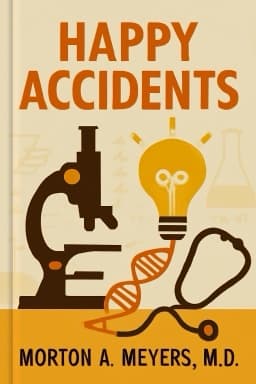
How Serendipity Changed Medicine: The Hidden Magic Behind Life-Saving Discoveries
Unlocking the surprising role of chance and prepared minds in shaping modern medicine.

Imagine a world where the most profound medical breakthroughs were not the result of planned experiments alone but rather the product of chance, observation, and a prepared mind ready to seize opportunity. This is the realm of serendipity in medicine — a concept that celebrates the unexpected and the creative insight that follows.
Serendipity Defined: Coined in 1754, the term 'serendipity' describes the faculty of making happy and unexpected discoveries by accident. In medicine, this means that many of the treatments and understandings we now take for granted were stumbled upon rather than deliberately sought. Yet, these discoveries required a prepared mind to recognize their value.
Consider the accidental discovery of penicillin by Alexander Fleming. A mold contaminating a petri dish killed bacteria around it, an observation that could have been ignored but instead sparked the antibiotic revolution. This discovery not only saved countless lives but also opened the door to modern antimicrobial therapy.
Before antibiotics, medicine was transformed by the germ theory of disease, which emerged from the pioneering work of scientists who observed microbes through early microscopes and challenged the idea of spontaneous generation. This paradigm shift led to antiseptic surgery and vaccines, fundamentally changing healthcare.
The story continues with the birth of chemotherapy, which originated from the colorful world of synthetic dyes derived from coal tar. Observations that dyes selectively stained microbes inspired Paul Ehrlich’s 'magic bullet' concept — chemicals that target pathogens without harming the host. This idea eventually led to the first chemical treatments for infectious diseases.
War, tragedy, and accident also played roles in medical progress. Mustard gas exposure during World War II led to the discovery that chemicals could target rapidly dividing cells, paving the way for cancer chemotherapy. Similarly, the heart’s electrical activity was first recorded using the string galvanometer, and self-experimentation by Werner Forssmann opened new diagnostic avenues.
In psychiatry, drugs like reserpine and lithium were discovered to have calming effects almost by chance, shifting the field toward biological treatments and improving mental health outcomes dramatically.
Today, nurturing serendipity is more important than ever. While scientific rigor is essential, openness to unexpected results and interdisciplinary collaboration fuel innovation. Crowdsourcing and flexible research models promise to democratize discovery and accelerate breakthroughs.
In summary, serendipity in medicine teaches us that while luck plays a part, it is the prepared, curious, and open mind that turns chance into cure. Embracing this philosophy can inspire the next generation of medical breakthroughs.
References:
- PMC article on serendipity in drug discovery 1
- ScienceAlert's overview of accidental scientific discoveries 2
- Azol Life Sciences article on serendipity in science 4
- New Humanist's coverage of famous accidental discoveries 3
Want to explore more insights from this book?
Read the full book summary