
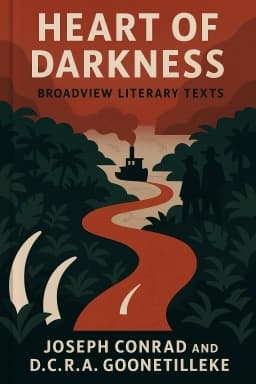
Inside the Mind of Kurtz: The Dark Charisma That Defines ‘Heart of Darkness’
Exploring the enigmatic figure whose tragic fall reveals the soul of imperialism

Kurtz is perhaps the most enigmatic and haunting figure in Joseph Conrad’s Heart of Darkness. His presence looms large despite limited direct appearances, embodying the moral and psychological core of the novella. To understand Kurtz is to confront the terrifying potential of human nature unmoored from ethical constraints.
Initially portrayed as a brilliant and eloquent man, Kurtz represents the imperial ideal taken to its extreme. His charisma and vision attract followers, and his reports to Europe boast lofty ideals about bringing enlightenment and progress. Yet, as Marlow journeys deeper into the Congo, the façade crumbles. Kurtz’s methods become ruthless, marked by violence, exploitation, and madness. His isolation in the jungle removes him from society’s checks and balances, allowing his darker impulses free reign.
Philosophically, Kurtz can be seen as a Nietzschean ‘overman’—a figure who transcends traditional morality to create his own values. However, this transcendence leads not to greatness but to a catastrophic fall, mirroring the Christian legend of Lucifer’s pride and expulsion from heaven. Kurtz’s final cry, “The horror! The horror!”, is a moment of self-awareness and despair, acknowledging the abyss he has gazed into and become part of.
Kurtz’s dual nature—both charismatic leader and monstrous tyrant—forces readers to grapple with the thin line separating civilization from savagery, light from darkness. He is a mirror reflecting the potential for evil that resides within us all when power goes unchecked and conscience is silenced.
This character study invites reflection on the psychological costs of imperialism and the human tendency toward self-destruction. Kurtz’s story is not just a historical critique but a timeless meditation on ambition, isolation, and the shadows lurking in the human soul.
Understanding Kurtz enriches our reading of the novella and challenges us to confront uncomfortable truths about ourselves and the societies we build.
Sources: SparkNotes, Britannica 1 2
Want to explore more insights from this book?
Read the full book summary