
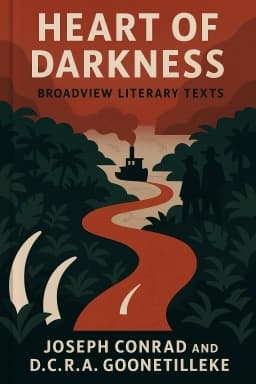
Light, Shadow, and Illusion: The Symbolic Heartbeat of ‘Heart of Darkness’
How Conrad’s masterful use of light and darkness challenges our understanding of good and evil

One of the most compelling aspects of Joseph Conrad’s Heart of Darkness is its masterful use of symbolism, particularly the interplay of light and darkness. Traditionally, light symbolizes purity, truth, and civilization, while darkness represents evil, ignorance, and savagery. Conrad, however, turns these conventions upside down to deliver a profound critique of imperialism and human nature.
In the novella, the ‘light’ of European civilization often masks hypocrisy, violence, and moral blindness. The imperialist mission, heralded as a beacon of progress, brings destruction and death. The metaphor of the ‘whited sepulchre’—a whitewashed tomb—vividly captures this paradox: outwardly pure and grand, yet concealing decay and corruption within.
Conversely, the darkness of the jungle is not simply a symbol of evil but represents the unknown, the unconscious mind, and the complexity of human nature. It is a space where societal masks fall away, revealing raw truths and primal impulses. The journey into the Congo becomes a metaphorical descent into these shadowy depths.
This inversion challenges readers to rethink simplistic binaries of good and evil, civilization and savagery. It suggests that moral clarity is elusive and that light and darkness coexist within individuals and societies. The ivory, gleaming white yet lifeless, further embodies this duality—symbolizing both wealth and death.
Through this rich symbolism, Conrad invites us to explore the ambiguities of human nature and the costs of imperial hubris. The novella’s enduring power lies in its ability to unsettle and provoke reflection on the shadows we all carry.
Sources: SparkNotes, PoetryTranslation.org 1 4
Want to explore more insights from this book?
Read the full book summary