
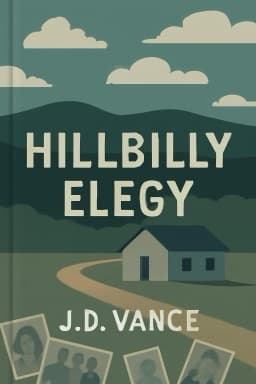
5 Hard Truths Hillbilly Elegy Reveals About the American Dream (And Why They Still Matter)
What J.D. Vance’s Memoir Teaches Us About Family, Failure, and the Fight to Succeed

J.D. Vance’s ‘Hillbilly Elegy’ is often celebrated as a tale of upward mobility, but its real power lies in the hard truths it tells about the American Dream. Here are five lessons the memoir drives home—lessons we can’t afford to ignore.
1. Family is Both a Lifeline and a Trap
Vance’s family is his greatest source of strength—and his greatest obstacle. His grandmother, Mamaw, is a fierce protector, but the chaos of his mother’s addiction and his family’s constant moves keep him off balance. Success, the book suggests, is impossible without at least one person who believes in you. But it also shows how family trauma can echo across generations, making escape nearly impossible for some.
2. Poverty is About More Than Money
Vance’s childhood is marked by instability—moving from home to home, never knowing what tomorrow will bring. The book makes clear that poverty is not just a lack of cash, but a lack of safety, stability, and hope. These invisible wounds are the hardest to heal.
3. Cultural Pride Cuts Both Ways
Appalachian culture is a source of identity and resilience, but it can also breed suspicion of outsiders and resistance to change. Vance’s memoir is full of stories about loyalty and honor, but also about the ways these values can keep people stuck.
4. Breaking the Cycle Takes More Than Grit
Vance is often held up as proof that anyone can ‘make it’ with enough determination. But his story is also one of luck—of finding mentors, catching breaks, and having just enough support to keep going. The memoir challenges the myth that hard work alone is enough.
5. Success Can Be Lonely
Even after reaching Yale, Vance feels like an outsider—caught between two worlds, never fully at home in either. The book’s final chapters are a meditation on the costs of success, and the difficulty of reconciling your past with your future.
In the end, ‘Hillbilly Elegy’ is a call to empathy—and a warning that the American Dream is still out of reach for too many. It’s a book that asks us to look beyond easy answers, and to recognize the complexity of the struggles so many Americans face.
Want to explore more insights from this book?
Read the full book summary