
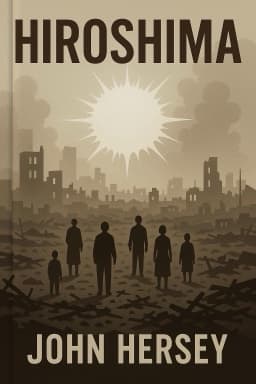
Inside the Chaos: How Hiroshima’s Medical Heroes Fought the Impossible
A behind-the-scenes look at the overwhelmed hospitals, the mystery of radiation, and the courage of healers under fire.

A behind-the-scenes look at the overwhelmed hospitals, the mystery of radiation, and the courage of healers under fire.
When the atomic bomb struck Hiroshima, it unleashed more than just physical destruction—it created a medical emergency unlike any the world had ever seen. Hospitals were instantly overwhelmed, with thousands of wounded flooding the corridors and streets. The majority of the city’s doctors and nurses were themselves dead or gravely injured, leaving only a handful to care for the masses. John Hersey’s ‘Hiroshima’ brings this crisis to life, revealing the exhaustion, ingenuity, and moral courage required to meet the impossible demands of the moment.
In these makeshift wards, the boundaries between healer and patient blurred. Doctors worked without rest, often treating others while ignoring their own injuries. Supplies ran out quickly, forcing staff to improvise: river water replaced antiseptics, and even eyeglasses were shared among the medical team. The book describes how, as days passed, a new and frightening illness began to appear. Survivors who seemed uninjured began to lose their hair, bleed from their gums, and develop high fevers—symptoms of radiation sickness, a phenomenon previously unknown to science.
The chaos was compounded by uncertainty and fear. Rumors spread about poison gas and curses, and the lack of information made it difficult for even the most experienced doctors to offer effective treatment. Yet, amid the confusion, countless acts of heroism occurred. Nurses comforted the dying, neighbors carried the injured on doors and carts, and exhausted staff refused to abandon their posts. These stories of improvisation and sacrifice highlight the extraordinary resilience of both individuals and communities.
The experience of Hiroshima’s medical workers has had a lasting impact on the world. It led to new understandings of disaster medicine, the dangers of radiation, and the importance of preparation and compassion in crisis. Their legacy endures in every hospital that faces the unthinkable, reminding us that even in the darkest hours, the human capacity to care, to heal, and to hope can never be destroyed.
For more on the medical crisis and the lessons learned, see analysis from Litcharts and survivor interviews collected by peace museums. 3
Want to explore more insights from this book?
Read the full book summary