
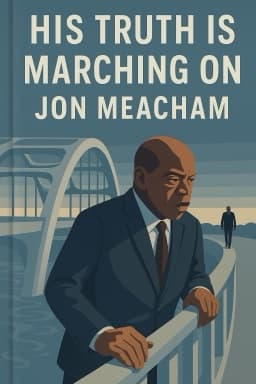
The Untold Courage: How John Lewis Changed America Forever
Discover the incredible journey of a young boy from rural Alabama who became a titan of justice and hope.

From Fields of Alabama to Halls of Power
John Lewis’s story begins in a small wooden house on a farm in rural Alabama, where the legacy of slavery and segregation cast long shadows. His great-grandfather was born enslaved, and the harsh realities of Jim Crow shaped his early life. Yet, within this environment of injustice, faith and family nurtured a spirit of resilience. As a boy, Lewis preached to chickens and absorbed the rhythms of church hymns, laying the foundation for a lifelong commitment to nonviolence and justice. Traveling north to Buffalo as a child, he glimpsed a more integrated world, sparking a hope that would fuel his activism.
His seminary years in Nashville deepened his understanding of history and philosophy. Influenced by Hegelian dialectics and the moral realism of Reinhold Niebuhr, Lewis embraced the belief that history bends toward justice through struggle. Under James Lawson’s mentorship, he trained in nonviolent resistance, preparing for the front lines of protest.
Sit-Ins and the Birth of Direct Action
The Nashville sit-ins marked a turning point. Lewis and fellow students sat peacefully at segregated lunch counters, enduring violence and arrest without retaliation. Their refusal to pay bail turned imprisonment into a moral statement, while economic boycotts pressured businesses to reconsider segregation. This disciplined, hopeful activism demonstrated the power of coordinated nonviolence and community solidarity.
Bloody Sunday: Sacrifice on the Edmund Pettus Bridge
The Selma march remains one of the most harrowing episodes in the civil rights movement. Lewis suffered a fractured skull in a brutal police attack, an image that shocked the nation and spurred federal action. The resulting Voting Rights Act of 1965 was a landmark victory, yet it came at great personal cost. Lewis framed this sacrifice as a redemptive act for America’s soul, blending spiritual resilience with political resolve.
Faith, Forgiveness, and Political Leadership
Lewis’s activism was deeply rooted in faith, which he saw as both a source of strength and a complex force in public life. He balanced the liberating aspects of Christianity with the need for inclusivity in a pluralistic society. Forgiveness was a radical political act, breaking cycles of hatred and fostering reconciliation. Transitioning to Congress, Lewis carried these principles into legislative advocacy, bridging generations and inspiring new movements.
The Movement’s Rich Tapestry
The civil rights movement was not monolithic. It encompassed diverse voices, from staunch nonviolence to calls for self-defense. Figures like Malcolm X challenged and complemented the movement’s strategies, enriching its complexity. Internal debates over tactics and goals fostered growth and adaptability, demonstrating that unity did not require uniformity.
Legacy and the Ongoing March
John Lewis’s final walk across the Edmund Pettus Bridge symbolized a lifelong commitment to justice and hope. His message to never give up and keep moving forward resonates amid ongoing challenges to voting rights and social equity. His legacy inspires activists worldwide, reminding us that the arc of history bends through the courage of those who persist.
John Lewis’s life teaches us that justice demands courage, faith, and unyielding hope. His story is a soothing balm for weary souls and a chilling reminder of the power and cost of change. As we reflect on his journey, we are called to continue the march toward a beloved community.
Want to explore more insights from this book?
Read the full book summary