
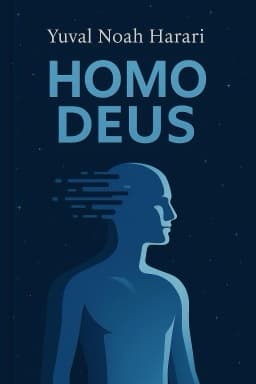
Will Humans Become Gods? The Shocking Truth Behind Homo Deus
Unveiling the startling realities and dilemmas as humanity races toward godlike powers.

What if humans could live forever, enhance their intelligence beyond imagination, or merge with machines to become superhuman? Homo Deus explores these tantalizing prospects and the complex realities behind them. The book reveals how biological engineering, cyborg technologies, and artificial intelligence are converging to redefine human existence.
Gene editing technologies like CRISPR allow us to rewrite the blueprint of life, potentially eliminating diseases and enhancing traits. Meanwhile, cyborg engineering integrates machines into the body, enabling brain-controlled prosthetics and neural implants that expand sensory and cognitive capabilities. Beyond the organic, artificial intelligences may soon surpass human intelligence, challenging our primacy on the planet.
However, these advancements are not without peril. Ethical dilemmas abound: Who decides which traits are desirable? Could enhancements deepen social divides, creating a new class of 'superhumans'? What rights will artificial beings possess? Harari urges us to confront these questions before technology outpaces our wisdom.
Adding to the complexity is the rise of Dataism — a worldview that venerates data flows and algorithms. As decisions increasingly rely on machine intelligence, human autonomy may erode, raising concerns about privacy, surveillance, and free will.
Ultimately, Homo Deus challenges us to ask: Will our godlike powers liberate us or enslave us? The future is a double-edged sword, and the choices we make today will determine which path we follow.
This blog dives deep into these themes, offering a critical yet hopeful perspective on the dawn of Homo Deus.
Sources: The Guardian, Bill Gates Notes, Medium, LitCritPop 1 2 3 4
Want to explore more insights from this book?
Read the full book summary