
Unlocking Asia’s Economic Miracle: The Untold Secrets Behind How Asia Works
Discover the hidden policies that turned Asia’s poorest nations into global economic powerhouses.

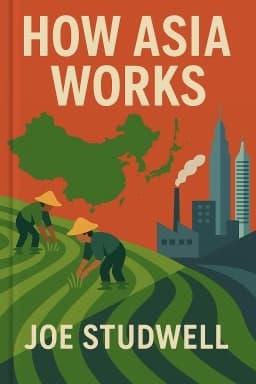
Asia’s economic transformation is one of the most compelling stories of the modern era. While many attribute the continent’s rapid growth to market forces or cultural factors, Joe Studwell’s acclaimed book How Asia Works provides a different perspective—one that emphasizes deliberate government intervention and strategic policymaking.
At the heart of Asia’s success lies the power of land reform. Post-war governments in Japan, South Korea, Taiwan, and China redistributed land to smallholder farmers, turning vast tenant populations into owners who had a direct stake in productivity. This shift wasn’t just about fairness; it created a competitive agricultural sector that produced high yields and generated surplus income. Unlike large plantations common in many developing countries, these household farms operated like intensive gardens, maximizing output through labor-intensive techniques.
But agriculture was only the beginning. The next phase involved nurturing manufacturing industries capable of competing on the global stage. Governments provided subsidies and protection—but only if firms met strict export targets. This export discipline forced companies to innovate, improve efficiency, and shed inefficiencies. Unlike import substitution strategies that protected domestic markets without requiring competition, Asia’s export-led model created world-class manufacturers.
Finance played a crucial supporting role. East Asian governments tightly controlled banking systems and capital flows, directing credit to priority sectors like agriculture and manufacturing. By keeping deposit interest rates low, they effectively taxed savers to fund subsidies and investments, a strategy often called 'financial repression.' While this approach might seem restrictive, it provided the stability and predictability necessary for sustained investment and growth.
China’s development story exemplifies these principles, albeit with unique twists. Early land reforms boosted agricultural output before collectivization caused a tragic famine. Post-1978 reforms reinstated household farming and introduced market mechanisms, blending state control with pragmatism to achieve unprecedented growth.
One of the most striking insights from Studwell’s work is the divergence within Asia itself. Countries sharing similar geography and culture experienced vastly different outcomes based on policy choices. Taiwan’s comprehensive reforms propelled it forward, while the Philippines’ failure to implement effective land reform and industrial policies left it lagging behind.
Education and firm-level learning also emerge as critical factors. While formal schooling is important, much of the technological progress happens inside firms competing internationally. Vocational training and on-the-job learning enable workers to upgrade skills and drive innovation.
Finally, the transition from agriculture to manufacturing is a complex social and economic process that requires careful management. Governments must coordinate infrastructure, training, and urban planning to ensure smooth labor shifts and avoid social disruption.
In sum, Asia’s economic miracle is a testament to the power of strategic state action, export discipline, and social reform. It challenges orthodox economic theories and offers a blueprint for other developing nations seeking rapid and inclusive growth.
For those interested in understanding the real drivers behind Asia’s rise, How Asia Works is an indispensable resource, rich with lessons that remain relevant today.
Sources: 5 Minute Book Summary, Shortform, Blinkist, Bookey.app 1 2 3 4
Want to explore more insights from this book?
Read the full book summary