
Why Land Reform Was Asia’s Secret Weapon for Economic Growth
How redistributing land to small farmers sparked a productivity revolution across East Asia.

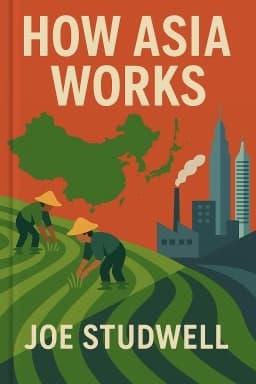
In the narrative of economic development, agriculture is often overshadowed by flashy industrial sectors and technological innovation. Yet, as Joe Studwell’s How Asia Works reveals, the transformation of agriculture through land reform was the indispensable first step in Asia’s rise.
After World War II, countries like Japan, Taiwan, South Korea, and China implemented sweeping land reforms, breaking up large estates and distributing land to tenant farmers. This was not just a social justice measure; it was an economic strategy. Smallholder farms, tended intensively by families, produced significantly higher yields than large plantations. For example, Taiwan’s agricultural output surged by up to 75% following land reform, with labor-intensive crops doubling in yield.
Why did small farms outperform large estates? The answer lies in incentives and labor intensity. Families working their own plots have a direct stake in maximizing output and managing resources efficiently. This 'gardening' approach contrasts with large plantations that often suffer from poor management and low labor motivation.
The surplus generated by productive agriculture created demand for manufactured goods, fueling urban growth and industrialization. Moreover, equitable land distribution reduced social tensions and fostered political stability, essential ingredients for development.
However, not all countries embraced land reform equally. The Philippines, for example, largely failed to redistribute land, leaving tenant farmers impoverished and agriculture stagnant. This failure contributed to persistent inequality and economic underperformance.
The United States played an influential but inconsistent role in promoting land reform, strongly supporting it in Japan and Taiwan but hesitating in Southeast Asia. This uneven support shaped divergent development paths across the region.
In sum, land reform was Asia’s secret weapon, turning millions of poor farmers into productive owners and laying the groundwork for the continent’s economic miracles. It challenges the notion that large-scale farming is always superior and underscores the importance of aligning incentives with ownership.
For policymakers and development practitioners, the lesson is clear: empowering smallholder farmers through land reform can ignite a virtuous cycle of growth and social progress.
Sources: 5 Minute Book Summary, Shortform, Blinkist 1 2 3
Want to explore more insights from this book?
Read the full book summary