
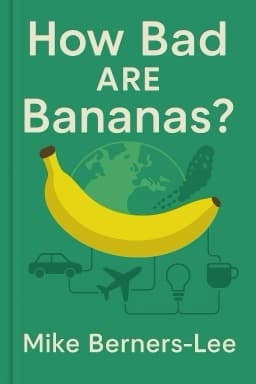
Why Your Carbon Footprint Is Bigger Than You Think — And How to Fix It
Unmasking Hidden Emissions and Practical Tips to Shrink Your Impact

Have you ever wondered how much carbon your lifestyle truly emits? Mike Berners-Lee’s How Bad Are Bananas? reveals that the answer is often much larger than most people realize. The reason? We tend to overlook the indirect emissions hidden in the products we buy, the food we consume, and the services we use. These embedded emissions, also known as supply chain emissions, can dwarf the direct emissions from activities like driving or heating our homes.
The book explains that a plastic toy’s carbon footprint includes not only the emissions from manufacturing but also the energy used to mine materials, transport components, and even produce office supplies used in the factory. This complexity makes it challenging to measure true carbon footprints but is essential for understanding our real impact.
One eye-opener is the carbon cost of flying. Due to the multiplier effect of emissions at high altitude, plane journeys have nearly twice the warming impact compared to similar emissions at ground level. This makes air travel one of the largest contributors to individual carbon footprints.
Food is another surprising area. While bananas have a low footprint despite long-distance shipping, beef and dairy products are carbon heavy due to methane emissions and land use. Air-freighted vegetables can have astronomical footprints compared to seasonal, local produce.
So, how can you fix this? Berners-Lee suggests focusing on high-impact actions: reducing air travel, improving home insulation, choosing plant-based foods, and maintaining vehicles longer. Small actions like turning off standby power or reducing waste are valuable but should not distract from bigger changes.
Importantly, the book emphasizes that individual efforts must be supported by systemic changes in infrastructure, policy, and corporate practices. Collective action amplifies individual impact, creating momentum for the large-scale transformations needed to address climate change.
By unmasking hidden emissions and providing practical advice, How Bad Are Bananas? empowers readers to take meaningful steps toward a lower-carbon lifestyle that benefits both the planet and their finances.
Explore more detailed reviews and summaries at Want to explore more insights from this book?