
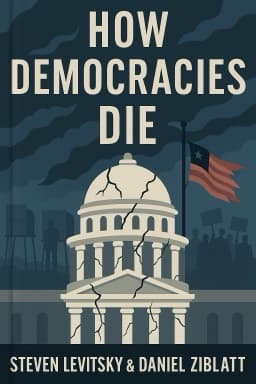
How Democracies Die: The Playbook of Modern Authoritarians (And How to Fight Back)
From Court Packing to Media Control: The Subtle Art of Killing Democracy

Forget the coup d’état. In the 21st century, democracy’s enemies don’t need tanks—they need lawyers, media consultants, and a loyal majority in parliament. Levitsky and Ziblatt’s How Democracies Die lays bare the new authoritarian playbook: a set of tactics so subtle, so incremental, that by the time most citizens realize what’s happening, the damage is done.
Step one: Capture the referees. Courts, election boards, and regulatory agencies are packed with loyalists. Legal challenges to the regime disappear, and the rules of the game change quietly, behind closed doors.
Step two: Silence or co-opt the press. Outright censorship is rare; instead, governments buy off media owners, intimidate journalists, or flood the airwaves with propaganda. The result is self-censorship, confusion, and a public that no longer knows whom to trust.
Step three: Rewrite the rules. Constitutions are amended, electoral laws tweaked, and opposition parties hamstrung by endless investigations. Each change is justified as a reform, but the net effect is to tilt the playing field until real competition is impossible.
Step four: Divide and demoralize the opposition. By targeting business leaders, activists, and cultural figures, autocrats sap the energy of resistance. The opposition is not crushed, but exhausted and divided.
The good news? Resistance is possible—if citizens, civil society, and opposition leaders recognize the playbook and unite early. History shows that broad alliances, public vigilance, and a free press are democracy’s best defenses. The tools of democracy can be used to destroy it, but also to save it—if we act in time. 3 4
Want to explore more insights from this book?
Read the full book summary