
Debunking the Emotion Myths: What TV, Movies, and Pop Culture Get Wrong
How Hollywood and the media mislead us about feelings—and what science really says.

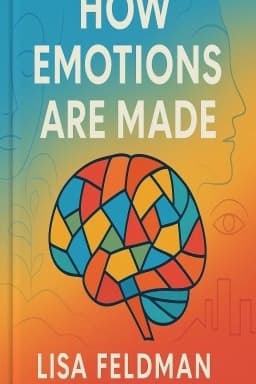
Think of your favorite detective show: a suspect’s face twitches, and the hero instantly knows they’re lying. Or the romantic lead’s smile signals true love, no matter the country or context. These stories make for great drama—but they’re based on a fundamental misunderstanding of how emotions work. Neuroscientist Lisa Feldman Barrett’s research has upended the idea that emotions are universal, hardwired, and easy to read.
For decades, movies and TV have taught us that emotions are written on the face, like words on a page. But scientific studies tell a different story. There is no single facial expression for anger, sadness, or joy that is recognized everywhere. In fact, when people from different cultures are shown the same facial expression, they often interpret it in wildly different ways—unless they’re given a list of emotion words to choose from. Without context, a 'fearful' face could just as easily be surprise, excitement, or even confusion.
This myth isn’t just harmless fun. In the courtroom, juries and judges are trained to 'read' emotions from a defendant’s face, leading to unfair verdicts. In medicine, doctors may misread a patient’s expression and miss a critical diagnosis. In schools, teachers might misjudge a child’s feelings and respond in ways that do more harm than good.
Barrett’s work shows that emotions are constructed—shaped by our brains, bodies, cultures, and the words we know. There is no anger 'fingerprint' or happiness 'circuit' in the brain. Instead, each emotion is a unique blend of sensations, memories, and concepts. The same scowl could mean anger in one context, concentration in another, or even joy in a third.
So, how can you become a more savvy consumer of emotional information? Start by questioning the stories you see in media. Notice how often characters’ feelings are assumed from their faces alone. Pay attention to context, language, and cultural cues. And remember: your own emotions are just as complex and unique as anyone else’s.
The next time someone claims they can 'read' your feelings at a glance, you’ll know the truth: emotions are not simple signals, but intricate stories, crafted by your brain and shaped by your world.
Want to explore more insights from this book?
Read the full book summary