
The Secret Life of Your Brain: How Emotions Are Made and Why It Matters
Unlocking the mysteries of your emotional brain for a happier, healthier you.

Imagine your brain as a prediction machine, constantly working behind the scenes to keep you alive. Every heartbeat, every breath, every rumble in your stomach is monitored and interpreted by your brain in a process called interoception. These internal signals don’t come with labels—they’re raw, ambiguous, and open to interpretation. Your brain’s job is to make sense of them, using your past experiences and the concepts you’ve learned. This is where emotions begin.
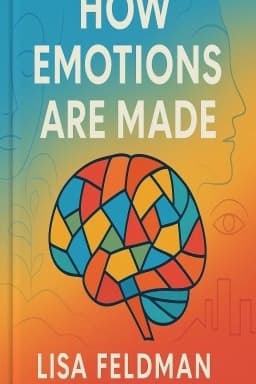
According to Lisa Feldman Barrett, your brain is not simply reacting to the world—it’s predicting what will happen next, preparing your body for action. When something unexpected occurs, your brain updates its predictions, sometimes flooding you with a wave of feeling. These basic sensations—pleasant or unpleasant, calm or agitated—are called affect. Only when you interpret these sensations with concepts and words do they become emotions like anger, joy, or fear.
This process explains why the same physical sensation can mean different things in different contexts. A racing heart before a presentation might be anxiety, but the same sensation before a roller coaster could be excitement. The difference lies in how your brain categorizes and explains what you feel. This is why there are no universal emotion fingerprints—no single facial expression, body posture, or brain circuit for any emotion. Every emotion is a unique construction, shaped by your history, culture, and the words you know.
Affective realism—the tendency to experience feelings as properties of the world—means your mood colors everything you see. On a bad day, the world looks hostile; on a good day, it seems full of opportunity. Recognizing this can help you pause and question your judgments: is this feeling about the world, or just about me?
The good news is that you can change how you feel by changing how you interpret your sensations. Learning new emotion words, practicing mindfulness, and reflecting on your feelings can increase your emotional granularity. This, in turn, leads to better self-regulation, stronger relationships, and greater well-being.
Understanding the secret life of your brain is more than just fascinating science—it’s a toolkit for living a wiser, happier life. By becoming aware of how your emotions are made, you gain the power to shape them, rather than be shaped by them.
Want to explore more insights from this book?
Read the full book summary