
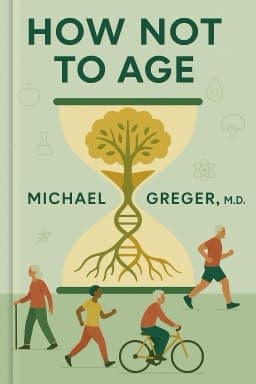
Unlocking the Secrets of Longevity: What ‘How Not to Age’ Reveals That Will Change Your Life
Discover the evidence-based strategies that can help you live longer, healthier, and more vibrantly—starting today.

Imagine a future where your later years are not defined by decline, but by vitality, purpose, and joy. This is the promise at the heart of Dr. Michael Greger’s 'How Not to Age,' a book that shatters the myth that aging is an unstoppable force of nature. Instead, Greger presents aging as a puzzle—one that modern science is rapidly solving, and one that you can influence every single day.
At the core of Greger’s message is the distinction between lifespan and healthspan. While medical advances have increased the number of years we live, many spend their final decades battling chronic diseases, pain, and loss of independence. The real goal, Greger argues, is to maximize healthspan—those years free from disease and disability. How? By targeting the root causes of aging at the cellular level.
The Eleven Pathways of Aging: Your Body’s Hidden Levers
Greger dives deep into the science of aging, revealing eleven biological pathways that govern how—and how quickly—we age. These include:
- AMPK activation, the body’s energy sensor
- Autophagy, the cellular cleanup crew
- Senescent cell clearance, removing ‘zombie’ cells
- Epigenetic regulation, turning genes on and off
What’s revolutionary is that you don’t need expensive drugs to influence these pathways. Regular exercise, plant-based diets, intermittent fasting, and stress reduction have all been shown to activate these longevity mechanisms. For example, a simple walk can trigger AMPK, while a handful of nuts or a bowl of berries can protect your mitochondria and reduce inflammation.
Lessons from the Blue Zones: The World’s Longevity Hotspots
Greger’s research is not confined to the lab. He draws on the real-world wisdom of Blue Zones—regions with the highest concentrations of centenarians, such as Okinawa, Sardinia, and Ikaria. What do these communities have in common? Plant-based diets, regular movement, strong social ties, and a deep sense of purpose. Genetics, Greger notes, account for only 15-30% of lifespan. The rest is up to us.
The Anti-Aging Eight: Your Daily Checklist
To make longevity actionable, Greger distills the science into the Anti-Aging Eight: eight foods, supplements, and habits with the strongest evidence for slowing aging. These include nuts, berries, leafy greens, moderate protein intake, prebiotics, caloric restriction, NAD+ boosters, and spermidine-rich foods. Each is backed by large-scale studies showing reductions in mortality, disease risk, and cognitive decline.
Beyond the Body: The Power of Social and Emotional Health
Perhaps the most surprising insight is the importance of relationships and emotional well-being. Chronic loneliness, Greger explains, is as deadly as smoking 15 cigarettes a day. Gratitude, mindfulness, and a sense of purpose are not just feel-good ideas—they have measurable effects on inflammation, immunity, and even gene expression.
Putting It All Together: A New Vision for Aging
'How Not to Age' is not just a guidebook; it’s a manifesto for a new era of aging. It invites us to see every day as an opportunity to renew, heal, and connect. The science is clear: small, consistent changes—adding a serving of greens, reaching out to a friend, practicing gratitude—compound over time, adding not just years to your life, but life to your years. The best time to start is now.
For those seeking a life of health, joy, and meaning at any age, Greger’s book is an essential companion. It’s time to rewrite the story of aging—one choice, one habit, one day at a time.
Want to explore more insights from this book?
Read the full book summary