
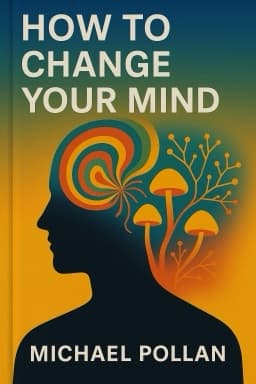
How Psychedelics Are Quietly Changing the World: The Science & Stories Behind ‘How to Change Your Mind’
From ancient rituals to modern medicine, discover how psychedelics are reshaping minds and society.

The Science & Stories Behind ‘How to Change Your Mind’
There was a time, not long ago, when the mention of psychedelics conjured images of tie-dye, rebellion, and wild music festivals. Today, the narrative is shifting—thanks in no small part to Michael Pollan’s groundbreaking book, How to Change Your Mind. The psychedelic renaissance is upon us, and it’s happening not just in underground circles, but in the world’s most respected research institutions and therapy rooms.
At the heart of this movement is the rediscovery of substances that have been used for millennia. Indigenous cultures in Central and South America have long revered psilocybin mushrooms—calling them ‘flesh of the gods’—and used them in sacred ceremonies to heal, bond, and seek wisdom. These traditions were nearly lost to colonial suppression, but the knowledge endured, passed down in secret until the world was ready to listen again.
Fast forward to the mid-20th century: LSD is accidentally synthesized by a Swiss chemist, and the world is forever changed. For a brief, dazzling moment, psychedelics are hailed as tools for creativity, therapy, and even spiritual awakening. But the pendulum swings back; fear and moral panic lead to prohibition, and research is buried under layers of stigma and law.
Yet, as Pollan’s book so beautifully illustrates, what is buried is not always lost. In the last two decades, a handful of dedicated scientists and therapists have resurrected psychedelic research. Their findings are nothing short of remarkable. Clinical trials show that psilocybin and other psychedelics can help people break free from depression, addiction, and the fear of death—often after just a handful of guided sessions. The secret? It’s not just the molecule; it’s the context. The importance of set (your mindset) and setting (your environment) cannot be overstated. In carefully controlled environments, with trained guides and therapists, even the most challenging experiences can lead to profound healing.
Neuroscience is beginning to explain why. Psychedelics quiet the ‘default mode network’—the part of the brain responsible for our sense of self and our habitual patterns of thought. When this network quiets, the brain becomes more interconnected, allowing for new insights, creative breakthroughs, and a sense of unity with the world. Many people describe these sessions as among the most meaningful experiences of their lives—on par with the birth of a child or the loss of a loved one.
But the story is not just personal. Society itself is changing. Cities and states are starting to decriminalize psychedelics, and public opinion is shifting from fear to curiosity. Integration circles and online communities are helping people process their experiences, ensuring that the benefits are lasting and the risks minimized. The future is bright, but also uncertain. As we move forward, we must balance enthusiasm with caution, science with respect for tradition, and personal healing with collective responsibility.
As Pollan writes, the journey is far from over. The most important work may be just beginning: learning how to integrate these powerful tools into our lives, our health systems, and our culture in a way that honors both the science and the spirit of the psychedelic experience.
Want to explore more insights from this book?
Read the full book summary