
Unlocking the Brain’s Secret Code: How Pattern Recognition Powers Human Intelligence and AI
Discover the elegant algorithm behind human thought and how it’s inspiring a new generation of AI technologies.

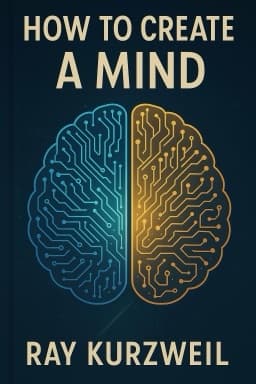
Imagine a machine so complex yet so elegant that it can recognize patterns within patterns, predict future events, and build abstract ideas from simple sensory inputs. This is not science fiction but the very essence of the human brain’s neocortex — a six-layered sheet of neural tissue that forms the basis of our intelligence.
At the heart of cognition lies hierarchical pattern recognition. Our brain breaks down the world into manageable pieces: edges become shapes, shapes become objects, objects become concepts, and concepts become narratives. This hierarchical processing allows us to navigate complexity with remarkable efficiency.
Biologically, these modules are stable neuronal assemblies, genetically programmed yet shaped by experience. Their connections form a 3D grid enabling efficient communication and learning. This modular design explains the brain’s plasticity — its ability to adapt and rewire itself in response to new experiences.
Such a perspective not only illuminates how we think but also inspires the design of artificial intelligence systems. Hierarchical Hidden Markov Models and other brain-inspired algorithms replicate these principles to enable machines to understand speech, recognize images, and even generate creative outputs.
Moreover, projects like the Blue Brain Project aim to digitally simulate brain regions, pushing the boundaries of what AI can achieve by mimicking biological circuits.
Understanding this algorithmic heart of the brain empowers us to appreciate the unity of biology and technology, opening doors to enhanced cognition, creativity, and even the merging of human and machine intelligence.
As we continue to unravel the brain’s secrets, we find ourselves on the threshold of a new era where intelligence transcends biology, shaping the future of humanity.
References: 3 , 4
Want to explore more insights from this book?
Read the full book summary