
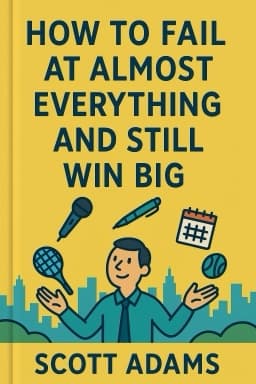
Why Failing Spectacularly Might Be Your Best Move Yet: The Scott Adams Success Formula
Discover how embracing failure, mastering your mindset, and building smart systems can transform your life.

Many of us grow up fearing failure, viewing it as a sign of inadequacy or the end of the road. Scott Adams, the creator of the wildly popular comic strip Dilbert, flips this narrative on its head. In his book How to Fail at Almost Everything and Still Win Big, Adams presents failure not as a setback but as a resource — a tool to be managed, learned from, and leveraged on the path to success.
Adams’ journey is a testament to this philosophy. Before Dilbert, he experienced numerous failures, from failed business ventures to personal setbacks. Yet, by embracing failure, he gathered invaluable lessons that shaped his eventual success. This perspective alone is transformative: failure is not your enemy but your teacher.
Systems Over Goals: The Sustainable Path
One of Adams’ most compelling ideas is that systems trump goals. Goals are specific endpoints — lose 10 pounds, write a book, or get a promotion. While motivating, they often create pressure and a binary sense of success or failure. Until the goal is achieved, you may feel like a failure, which can sap motivation.
Systems, by contrast, are ongoing processes: eat healthy meals, write daily, or improve skills continuously. These habits build momentum and reduce the emotional rollercoaster associated with goals. Imagine a river flowing steadily, with each daily action a stepping stone forward. This approach fosters resilience and consistent progress.
Personal Energy: The Core Metric
Adams emphasizes that the most important metric to track is your personal energy. How you feel physically and mentally directly impacts your productivity and happiness. Exercise, nutrition, sleep, and stress management are not just health advice — they are foundational to success. High energy levels amplify focus, creativity, and the ability to seize opportunities.
Mastering Mindset and Attitude
Your attitude is a superpower you can control. Through manipulating your thoughts, body language, and environment, you can program yourself to maintain a positive outlook. Even simple actions like smiling can trigger positive brain chemistry, improving mood and social interactions. This mindset mastery complements your systems and energy management, creating a holistic approach to thriving.
Recognizing Talents and Knowing When to Quit
Success isn’t just about persistence; it’s also about strategic quitting. Adams advises identifying your strengths and focusing your energy there. Every new skill you acquire doubles your odds of success, so invest in areas where you have natural talent or can develop it effectively. Quitting poor fits frees resources for better opportunities.
Timing, Luck, Humor, and Affirmations
Timing and luck play undeniable roles in success, but they can be partially managed through preparation and positioning. Adams also highlights humor as a vital coping mechanism to maintain perspective and resilience. Affirmations, while not magic, can reprogram limiting beliefs when used consistently, boosting confidence and focus.
Integrating It All: Your Blueprint for Winning Big
The magic of Adams’ philosophy lies in integration. Failure, systems, energy, mindset, talents, timing, humor, and affirmations form a cohesive blueprint. Simplicity is key — clear, manageable systems and habits empower consistent progress and adaptability. Success is multifaceted, requiring balance and resilience rather than perfection.
By reframing failure, focusing on systems, managing your energy, mastering your mindset, and embracing timing and humor, you can transform your approach to life and work. Scott Adams' story and insights offer a powerful, practical guide to winning big on your own terms.
Sources: Barnes & Noble, Amazon, Eric Sandroni, So Brief 1 2 3 4
Want to explore more insights from this book?
Read the full book summary