
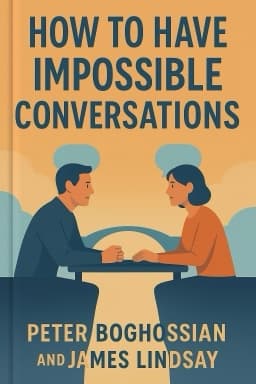
Why Most Conversations Fail — And How This Book Teaches You to Win Without Fighting
Discover the hidden reasons conversations go wrong and learn science-backed methods to engage effectively.

Have you ever left a conversation feeling frustrated, unheard, or even more convinced that the other person is wrong? You're not alone. Most conversations, especially on contentious topics, fail because participants treat dialogue as a battle to be won rather than a shared journey toward understanding.
According to How to Have Impossible Conversations, this adversarial mindset triggers defensiveness and shuts down openness. People tend to cling to their beliefs not just because of facts, but because those beliefs are tied to their identity and social belonging. When challenged, the natural reaction is to defend rather than reconsider.
The book highlights several psychological phenomena that sabotage conversations. For instance, presenting facts directly often backfires, causing people to double down on their views. Instead, the authors recommend techniques like modeling ignorance—admitting what you don’t know—to invite others to reveal their own uncertainties.
Language matters immensely. Words like 'but' can create opposition, while replacing them with 'and' fosters collaboration. Also, following Rapoport’s Rules—restate your partner’s position before disagreeing—builds respect and reduces hostility.
Empathy is not just a feel-good concept but a strategic tool. Showing genuine care and assuming good intentions lowers defenses and opens pathways for influence. The authors also stress the importance of patience; belief change is a slow process requiring sustained effort and kindness.
By understanding these dynamics and applying the book’s strategies, you can transform conversations from battlegrounds into bridges. Whether engaging friends, family, or strangers, you’ll learn to communicate in ways that invite curiosity, reduce conflict, and foster meaningful connection.
Ultimately, winning a conversation is not about defeating the other person but about opening doors to new perspectives and mutual respect. This book offers a practical guide to doing just that, blending psychology, empathy, and communication science into actionable steps.
So next time you face a challenging discussion, remember: it’s not about winning the argument but winning the relationship—and that starts with how you listen, speak, and connect.
Sources: Conversational Leadership Network, WiseWords Blog, Facebook Group on Difficult Dialogues, YouTube Talks by Peter Boghossian 1 2 3 4
Want to explore more insights from this book?
Read the full book summary