
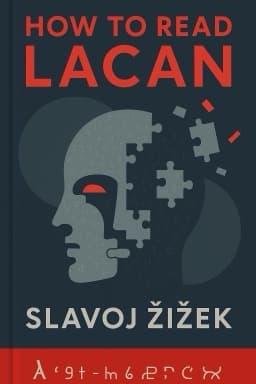
Unlocking the Mind’s Puppet Master: How Lacan’s Big Other Rules Your Life (And You Don’t Even Know It)
Discover the invisible force shaping your desires, actions, and even your identity through language and social laws.

Imagine an invisible presence that governs every word you speak, every social gesture you perform, and even the desires that shape your identity. This is the essence of Jacques Lacan’s concept of the Big Other — not a person, but a symbolic order that structures our reality through language and law.
Unlike traditional authority figures, the Big Other exists virtually, sustained by the collective belief of society. It is the 'law' that commands and judges, the 'cause' for which we sacrifice, yet it has no physical form. This paradoxical presence shapes our unconscious subjectivity, meaning that our sense of self is deeply intertwined with this symbolic order.
Consider the curious phenomenon of empty gestures — social acts performed only to be refused, yet essential for maintaining social harmony. For example, when a friend offers to withdraw from a competition only to have the other refuse, a silent pact of solidarity is reaffirmed. These gestures are symbolic offers, not meant for acceptance but to sustain social bonds. Similarly, everyday politeness often involves phrases like 'How are you?' which are less sincere inquiries and more rituals renewing social connection.
This symbolic dance reveals that much of our social life is a performance shaped by invisible rules. Our freedom is framed by the Big Other’s laws; we feel autonomous, yet we act within constraints we have internalized. The Big Other watches us not as a physical presence but through the language and norms we embody.
Understanding the Big Other also sheds light on alienation. We are caught in a web of symbolic relations that both enable and limit our expression, creating a tension between individuality and social conformity. This insight challenges us to reconsider notions of freedom and identity, recognizing that our desires and actions are always mediated by the symbolic order.
By grasping the role of the Big Other, we gain a powerful lens to analyze social phenomena, from rituals and politeness to power dynamics and unconscious desires. It invites us to explore the depths of human subjectivity and the invisible forces shaping our lives.
As we move forward, we will explore how this symbolic order extends into our emotional lives through the fascinating concept of interpassivity, where objects and others laugh, pray, and act for us, relieving us of direct engagement.
Want to explore more insights from this book?
Read the full book summary