
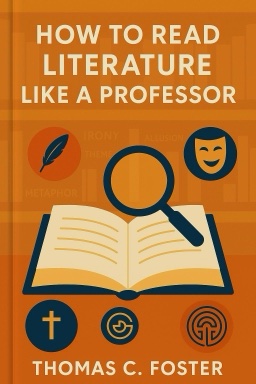
Unlock the Secret Language of Stories: How to Read Literature Like a Professor!
Discover the hidden codes behind every story and transform your reading experience forever.

Have you ever wondered why some stories feel richer, more meaningful, and resonate deeply across generations? Thomas C. Foster’s seminal work, How to Read Literature Like a Professor, reveals the hidden codes and patterns that underlie the tales we love. This book is a treasure trove for readers eager to dive beneath the surface and uncover the secret language of literature.
At the heart of Foster’s approach is the idea that every story is a quest—not just a physical journey but a profound voyage of self-discovery. The quester, the destination, the challenges faced, and the elusive true purpose all combine to create narratives that mirror our own struggles and growth. For example, a simple errand like buying bread can symbolize a young person’s passage into adulthood, fraught with trials that test identity and courage.
Foster also highlights the power of communion, where shared meals in literature are never just about food. They symbolize connection, trust, and sometimes tension between characters. Whether it’s a family dinner fraught with unspoken conflicts or a raucous feast charged with desire, these scenes reveal the social fabric binding characters together or tearing them apart.
But not all consumption is benign. Vampires and ghosts in literature often serve as metaphors for exploitation and selfishness. These supernatural figures represent the darker sides of human relationships—those who drain others emotionally, financially, or socially. Victorian literature, constrained by social mores, cleverly used such creatures to explore taboo topics like sexuality and repression. Recognizing this symbolism adds layers of meaning to stories that might otherwise seem like mere horror tales.
Moving from the symbolic to the structural, Foster unpacks the sonnet’s geometric precision. The fourteen-line poem, usually in iambic pentameter, uses its form to shape meaning, dividing into an octave and sestet that create tension and resolution within a compact space. This architectural beauty reflects the emotional depth poets convey, making the sonnet a powerful vehicle for exploring love, loss, and memory.
Literature is also a vast conversation across time, where no work is entirely original. Intertextuality—the dialogue between texts—allows authors to borrow, echo, and transform familiar characters and plots. Fairy tales, myths, and classic stories serve as cultural touchstones that writers use to add resonance and irony. For instance, a modern story about lost children might evoke Hansel and Gretel, layering contemporary themes over ancient archetypes.
Few influences are as pervasive as Shakespeare’s. His language, characters, and themes saturate English literature and culture. Phrases like "to thine own self be true" have become everyday idioms, while his plays inspire countless adaptations in opera, film, and theater. Shakespeare’s works offer timeless insights into human nature, power, love, and tragedy, continuing to shape storytelling centuries after they were written.
Irony, Foster explains, is the dominant mode of modern literature. Whether verbal, situational, or dramatic, irony creates complexity by contrasting appearance and reality. It engages readers, encouraging them to question and interpret deeper meanings. This device adds tension, surprise, and richness to narratives, reflecting the ambiguities of real life.
Finally, literature is inseparable from its social and political contexts. Stories reflect and critique power structures, cultural values, and religious beliefs. Even seemingly apolitical tales carry undercurrents of social commentary. Recognizing these dimensions allows readers to appreciate literature not just as art but as a dialogue with society.
By embracing these insights—from quests and communion to irony and intertextuality—you unlock a deeper, more rewarding way to read. Foster’s book invites us to see literature as a living conversation that spans centuries, cultures, and human experiences. Each story becomes a journey not just through plot but through the heart of what it means to be human.
Want to explore more insights from this book?
Read the full book summary