
Why You’re Missing the Hidden Messages in Your Favorite Books (And How to Find Them)
Unlock the secrets authors hide in plain sight and transform your reading forever.

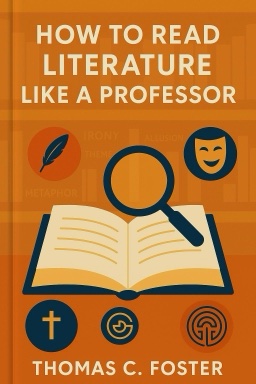
Have you ever finished a novel or watched a film and felt like there was something more beneath the surface—something you just couldn’t quite grasp? The truth is, many of us read stories without noticing the rich layers of meaning authors weave into their work. Thomas C. Foster’s How to Read Literature Like a Professor is a brilliant guide that teaches us how to spot these hidden messages and appreciate literature on a whole new level.
One of Foster’s key insights is that many stories follow the structure of a quest. But these quests are seldom just about the external goal. Instead, they represent the protagonist’s journey toward self-knowledge. For example, a character’s simple errand might symbolize a rite of passage or an internal struggle with identity.
Another fascinating idea is the symbolism of eating together. Meal scenes in literature are rarely just about food—they are moments of communion that reveal relationships and social dynamics. Whether it’s a tense family dinner or a passionate feast, these scenes can symbolize trust, desire, or conflict.
However, not all acts of consumption are positive. Vampires and ghosts often symbolize exploitation and selfishness. Victorian authors used these supernatural figures to discuss taboo topics like sexuality and repression under the guise of horror. Recognizing vampirism as a metaphor for emotional or social draining adds depth to these stories.
Foster also explains the power of poetic form, particularly the sonnet. The sonnet’s strict fourteen-line structure and iambic pentameter create a 'square' shape that shapes meaning. The division into octave and sestet allows poets to develop and resolve ideas succinctly, packing emotional complexity into a small space.
Intertextuality is another crucial concept. No story exists in isolation; writers borrow and transform familiar plots and characters, often drawing on fairy tales and myths. Recognizing these echoes enriches our reading, revealing how stories converse across time and culture.
Few literary figures loom as large as Shakespeare. His language, characters, and themes pervade literature and popular culture. From everyday phrases to modern adaptations, his influence is everywhere, reminding us of the enduring power of great storytelling.
Irony, Foster notes, is a dominant literary mode today. It challenges readers to look beyond appearances and question deeper truths. Verbal, situational, and dramatic irony each create layers of meaning that make stories more engaging and thought-provoking.
Finally, literature reflects the political, religious, and social contexts in which it is created. Even stories that seem purely personal or fantastical often carry social critiques and cultural values. Understanding these contexts allows us to appreciate literature as a dialogue with the world around us.
By learning to recognize these elements—quests, communion, vampirism, form, intertextuality, Shakespeare’s influence, irony, and context—you unlock the hidden messages authors embed in their work. This knowledge transforms reading from passive entertainment into an active, enriching experience.
Want to explore more insights from this book?
Read the full book summary