
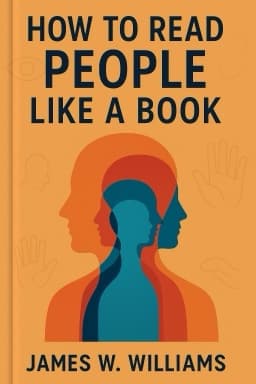
Why You’re Misreading People and How to Fix It: The Ultimate Guide to Body Language and Communication
Stop making costly social mistakes by learning the science-backed secrets of reading people accurately.

Have you ever felt confused by someone's words because their body said something else? Or found yourself frustrated when your attempts to communicate fall flat? These moments often arise from misreading key social signals. The good news is that these skills can be learned and refined.
One major mistake is confusing communication styles. Passive communicators may avoid directness, leaving their true feelings hidden behind hints. Aggressive communicators can intimidate, causing others to shut down. Understanding these styles helps you adapt your approach, encouraging clearer, more respectful exchanges.
Body language is another area ripe for misinterpretation. People often miss microexpressions—brief involuntary facial movements—that reveal true emotions. For instance, a quick flash of anger or sadness may contradict a smile. Also, pupil dilation and blinking patterns are subtle but reliable indicators of interest or stress.
Active listening is crucial. Paying attention to tone, word choice, and pauses helps you grasp what’s really being said. Words like 'fine' or 'nothing' can mask deeper feelings. Asking open-ended questions and paraphrasing ensures you understand correctly.
Thin slicing—the ability to make quick, accurate judgments—can be a double-edged sword. While it helps in rapid assessments, biases can creep in if unchecked. Balancing intuition with empathy and open-mindedness is key.
Finally, self-awareness is your secret weapon. Knowing your personality and communication tendencies allows you to recognize when you might be projecting or misinterpreting. Coupled with an understanding of human motivation, such as Maslow’s hierarchy, you can interpret behavior with compassion rather than judgment.
By avoiding these common pitfalls and applying science-backed strategies, you’ll enhance your social skills, deepen your relationships, and navigate complex interactions with ease. Remember, effective communication is both an art and a science—mastering it takes practice, patience, and a willingness to learn.
Sources: Verywell Mind, Psychology Compass, Psychology Today 1 2 3
Want to explore more insights from this book?
Read the full book summary