
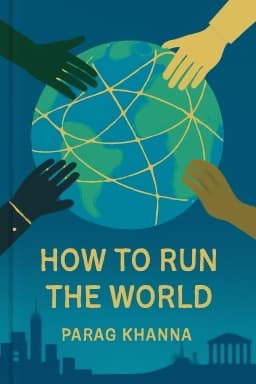
Can Crisis Be a Catalyst? Lessons in Resilience from ‘How to Run the World’
How Disasters and Chaos Are Sparking a New Era of Cooperation

How Disasters and Chaos Are Sparking a New Era of Cooperation
What if the world’s greatest crises were not just threats, but opportunities for renewal? In How to Run the World, Parag Khanna makes a compelling case that chaos—far from being a sign of decline—can be the spark for creativity, collaboration, and resilience. Across the globe, when disaster strikes, it is often coalitions of NGOs, businesses, local leaders, and faith groups that respond first and most effectively. These coalitions are not just stopgaps; they are laboratories for new forms of governance, trust, and innovation.
Take, for example, the response to major natural disasters. In places where governments are slow or absent, NGOs and local volunteers deliver aid, set up clinics, and rebuild infrastructure. Corporations pitch in with logistics, technology, and funding. Faith groups mediate peace and offer shelter. This is hybrid sovereignty in action—a flexible, adaptive approach where multiple actors share power and responsibility.
Khanna’s message is clear: resilience is born from collaboration, not control. The most successful responses are those that are inclusive, experimental, and willing to learn from failure. Crises, he argues, are not interruptions to the normal order—they are the new normal. And with the right coalitions, they can be moments of breakthrough rather than breakdown.
For readers seeking practical lessons, the blog offers strategies for turning crisis into opportunity: build diverse coalitions, empower local actors, experiment boldly, and always keep learning. The future will be turbulent, but it will also be full of hope—for those willing to work together.
Want to explore more insights from this book?
Read the full book summary