
From Chaos to Coalitions: How ‘Mega-Diplomacy’ is Quietly Shaping Our Future
Inside the Rise of Mini-Lateral Action and Why It Matters More Than Ever

Inside the Rise of Mini-Lateral Action and Why It Matters More Than Ever
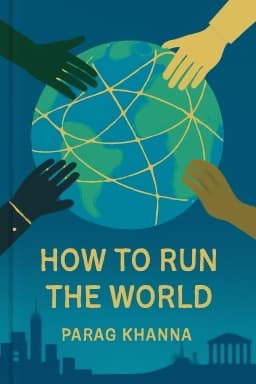
Step aside, United Nations. The world’s most pressing problems are increasingly being solved not by grand summits or global treaties, but by nimble coalitions of the willing—groups that cut across borders, sectors, and ideologies. This is the heart of Parag Khanna’s concept of 'mega-diplomacy,' a term that captures the creative, sometimes chaotic, but always pragmatic way the world now works. In a time when formal institutions are gridlocked, these coalitions are rewriting the rules of international relations.
What does mega-diplomacy look like? It’s when a handful of cities create their own climate accords, bypassing slow-moving national governments. It’s when tech companies and humanitarian groups use satellite data to direct aid to disaster zones faster than any government agency. It’s when a pop star or athlete uses their platform to raise awareness—and funds—for a global cause, sometimes achieving more in weeks than diplomats do in years.
The power of mega-diplomacy lies in its flexibility. Unlike traditional diplomacy, which is slow, hierarchical, and often bogged down by protocol, mega-diplomacy is fast, experimental, and open to anyone with initiative. It doesn’t wait for permission. If one coalition fails, another forms. If a project stalls, a new partnership is born. The result is a world where solutions can come from anywhere—and often do.
But this new order is not without its challenges. Accountability can be murky. Who is responsible when a coalition fails? How do we ensure transparency and fairness when power is so diffuse? Khanna acknowledges these issues, but argues that the benefits outweigh the risks. In a world of constant crises—pandemics, cyber threats, resource shortages—speed and adaptability matter more than ever.
The good news? Anyone can participate. The age of mega-diplomacy is an invitation to get involved, to build bridges, and to experiment with new forms of collaboration. It’s a world where your city, your company, or your community group can be a player on the global stage. And as Khanna’s book makes clear, the most important skill for the future is not authority, but the ability to form and lead coalitions—across every divide imaginable.
Want to explore more insights from this book?
Read the full book summary