
The End of Borders? How Cities and Hybrid States Are Remapping Our World
Why the Next Superpowers May Not Be Countries At All

Why the Next Superpowers May Not Be Countries At All
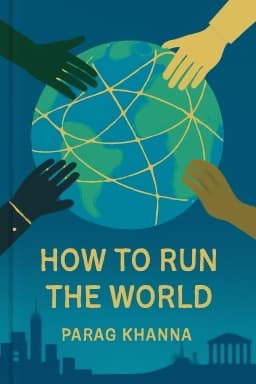
When you look at a world map, what do you see? For centuries, we’ve been taught to see countries—solid, immutable, defined by borders. But in How to Run the World, Parag Khanna argues that this view is increasingly outdated. Instead, the real story of our time is the rise of cities and hybrid states, where power is shared among governments, corporations, NGOs, and communities. This new map is dynamic, innovative, and—above all—local.
Consider this: just forty city-regions generate two-thirds of the world’s economic output. Cities like Singapore, Dubai, and New York are not just economic engines; they are diplomatic players, forging alliances, setting environmental standards, and shaping global culture. Meanwhile, in many parts of the developing world, hybrid states have emerged. Here, the state is only one actor among many. NGOs run hospitals, corporations provide security, and communities manage resources.
Borders are becoming more flexible. Cross-border infrastructure projects—shared power grids, trade corridors, digital networks—are making old boundaries less relevant. In places like Africa and Southeast Asia, open markets and joint projects are replacing checkpoints and barriers. The result is a world that is more interconnected, but also more complex.
Of course, this new order brings challenges. Who is accountable when things go wrong? How do you balance local autonomy with global responsibility? Khanna suggests that the answer lies in experimentation, transparency, and the willingness to learn from failure. The future, he argues, belongs to those who can adapt, collaborate, and build trust across every boundary—real or imagined.
For anyone interested in the future of power, governance, and community, this is a story worth following. The next superpowers may not be countries at all, but networks of cities, regions, and coalitions that know how to get things done.
Want to explore more insights from this book?
Read the full book summary