
From Loops to Life: The Surprising Ways Machines Are Becoming More Human
Explore how machines mimic life and what it means for the future of human-computer relationships.

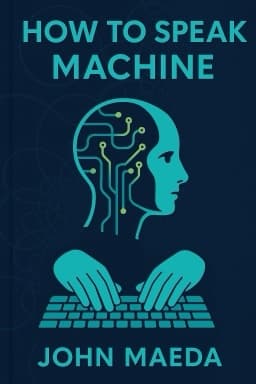
What does it mean for a machine to seem alive? John Maeda’s How to Speak Machine offers a compelling answer: it’s all about responsiveness and adaptability. Early robots with simple sensors could react to light or sound, evoking lifelike qualities. The Eliza chatbot, with its scripted pattern matching, created an illusion of conversation that captivated users despite its simplicity.
Fast-forward to today, and neural networks powered by GPUs enable machines to recognize images, understand speech, and generate text with remarkable fluency. These brain-inspired models learn from data rather than following fixed rules, blurring the line between code and cognition. Yet, Maeda reminds us that true life is more than computation; it is rooted in relationships and emergent behavior, as illustrated by Conway’s Game of Life.
Artistic insights play a crucial role in bridging human understanding and machine complexity. Natural patterns, fractals, and biological forms inspire new ways to visualize and interpret computational processes. This fusion of art and science nurtures empathy and curiosity, essential qualities as machines become more integrated into our lives.
Despite advances, human creativity, empathy, and imagination remain irreplaceable. Machines may mimic life, but the spark of consciousness and emotional depth is uniquely ours. Embracing this complementarity, rather than fear or competition, opens pathways to richer collaboration between humans and machines.
As we navigate this evolving landscape, Maeda’s insights encourage us to remain curious and compassionate, ensuring technology serves to enhance our humanity rather than diminish it.
Want to explore more insights from this book?
Read the full book summary