
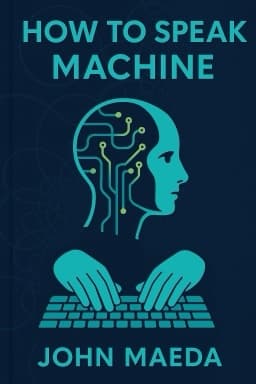
Unlock the Secret Language of Machines: Why ‘How to Speak Machine’ Will Change Your View on Technology Forever
Discover the hidden laws of computational design that transform how we interact with machines and shape the future.

In an era where technology permeates every aspect of our lives, understanding the language of machines is no longer optional—it’s essential. John Maeda’s How to Speak Machine offers a profound yet accessible journey into the computational world, revealing the laws that govern how machines think, learn, and evolve. This book is not just for programmers or designers; it’s a guide for anyone who wants to engage meaningfully with the digital future.
Maeda begins by illuminating the unique power of loops and recursion—fundamental constructs that allow machines to perform endless repetition without fatigue. Imagine a child typing a simple program that prints their name endlessly on a screen, a feat impossible for humans but effortless for computers. This metaphor sets the stage for understanding how machines operate on a fundamentally different scale than humans, embracing infinite repetition and self-reference.
The narrative then expands to the mind-bending concept of exponential growth. Using the famous lily pad doubling riddle, Maeda illustrates how computational power and nested loops create multi-dimensional spaces that defy our linear intuition. This exponential scale is the engine behind Moore’s law and the rapid acceleration of technology, yet it also poses challenges in keeping pace with such growth.
One of the book’s most compelling sections explores how machines begin to appear alive—not through consciousness but through responsiveness and adaptability. From early AI chatbots that mimicked human conversation to modern neural networks powered by GPUs, Maeda traces the evolution of lifelike computation. He highlights how art and natural patterns inspire a deeper understanding of these phenomena, reminding us that creativity and empathy remain uniquely human.
Maeda’s insights into design philosophy are particularly timely. Unlike physical products, computational products are never truly finished; they evolve continuously through iteration and user feedback. The concept of the Minimum Viable Lovable Product (MVLP) underscores the importance of emotional connection in technology, especially in subscription-based economies where user retention is key. This iterative, empathetic approach to design challenges traditional notions of perfection and permanence.
Instrumentation and telemetry emerge as vital themes—machines that listen and learn through data collection, enabling personalized experiences and continuous improvement. However, Maeda cautions about the trade-offs between personalization and privacy, urging a thoughtful balance. The integration of big data with thick, qualitative data enriches our understanding, fostering smarter and more humane technology.
Crucially, the book does not shy away from the social implications of computation. It confronts the biases embedded in AI systems and the exclusionary tendencies within the tech industry. Maeda advocates for open source, transparency, and ethical stewardship as antidotes to these challenges, emphasizing that human care must guide technological progress.
Ultimately, How to Speak Machine calls for a new fluency—one that blends technical skill with cultural literacy and ethical awareness. Curiosity, not fear, becomes the driver of innovation, and empathy grounds progress in humanity. Maeda’s hopeful vision empowers readers to become architects of a future where machines amplify our best qualities rather than diminish them.
This blog has distilled the essence of Maeda’s work, enriched with insights from leading voices in design and technology. Whether you are a student, professional, or curious reader, embracing the language of machines will unlock new opportunities and deepen your understanding of the digital age.
For further exploration, consider how this computational fluency aligns with emerging trends in AI ethics, human-centered design, and the democratization of technology. The journey to speak machine fluently is ongoing, and Maeda’s book is a vital companion on that path.
Want to explore more insights from this book?
Read the full book summary