
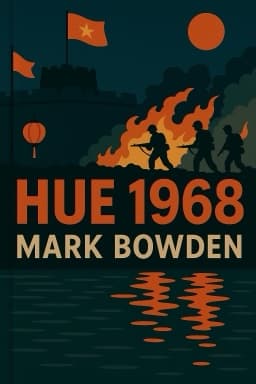
Inside the Tet Offensive: How Hue’s Fall Exposed the Truth About the Vietnam War
Unmasking the deception and denial that followed the shocking capture of Hue.

The Tet Offensive, launched during the Lunar New Year holiday in 1968, was designed to catch American and South Vietnamese forces off guard. The assault on Hue was among the most audacious and devastating components of this coordinated offensive. While the world celebrated the holiday, nearly ten thousand enemy troops overwhelmed the ancient city, capturing most of it within hours. This sudden and brutal seizure shattered the illusion that the war was progressing favorably for the United States and its allies.
In the aftermath, military and political leaders struggled to reconcile the stark reality with their optimistic public narratives. Inflated enemy body counts became the primary measure of success, a flawed metric that obscured the true state of the conflict. Press briefings, sometimes called the 'Five O’Clock Follies,' were met with skepticism as journalists reported on the ground realities that contradicted official statements.
This growing credibility gap fueled public disillusionment and intensified the antiwar movement. Americans, long trusting in government assurances, began to question the war’s purpose and prospects. The battle for Hue thus became a symbol of the war’s futility and the limits of military power against a determined and adaptable enemy.
Leadership faced unprecedented challenges balancing political pressures with military realities. Delayed reinforcements, denial of setbacks, and overconfidence exacerbated the situation on the ground. The human toll was immense: soldiers fought in brutal urban conditions, civilians suffered displacement and death, and the psychological strain weighed heavily on all involved.
Media coverage brought graphic images and stories into American homes, sparking protests and debates that would shape national policy. The battle’s impact extended far beyond Vietnam, influencing elections, diplomacy, and the eventual decision to seek withdrawal.
Understanding the Tet Offensive and the Battle of Hue reveals the complexities of war beyond battlefield tactics. It exposes the interplay of strategy, politics, media, and public perception, and the profound consequences when these forces collide.
As we reflect on this pivotal moment, we gain insight into the challenges of leadership, the power of information, and the enduring human cost of conflict.
Sources: Wikipedia, Military.com, Warfare History Network, West Point Urban Warfare Project
Want to explore more insights from this book?
Read the full book summary