
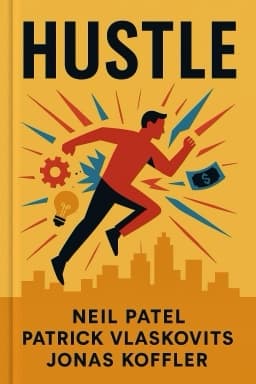
Why Dreaming Bigger Isn’t Enough: The Real Science of Hustle
How to Reclaim Your Dreams and Make Them Real—No Matter Where You Start

How to Reclaim Your Dreams and Make Them Real—No Matter Where You Start
Do you ever feel like you’re living someone else’s life? You’re not alone. According to 'Hustle,' most people unconsciously rent their dreams, following a path set by others—parents, teachers, bosses, or society at large. This borrowed blueprint leads to what the authors call the 'Cycle of Suck': a loop of emotional disconnect, routine monotony, and deferred dreams. The first step to breaking free is to own your dreams. This means questioning the expectations you’ve inherited and asking yourself: What do I truly want?
But it’s not enough to just dream. The book draws on psychological research, like the concept of learned helplessness, to show how repeated setbacks can convince us that change is impossible—even when it’s not. The key is to recognize this trap and start taking small, manageable risks. This is where the science of hustle comes in. Just as a muscle grows stronger through small doses of stress, so too does your capacity for change. The authors call this hormesis: growth through exposure to manageable challenges.
Real transformation happens through action. The book is filled with stories—like the immigrant who started as a bathroom attendant and became a business owner, or the creative who finally found her calling after years of self-doubt. These examples prove that the journey to meaning and momentum is not about waiting for the perfect moment, but about moving, experimenting, and learning from every step.
One of the most powerful tools in the book is the Personal Opportunity Portfolio (POP). Instead of putting all your eggs in one basket, diversify your efforts: invest in your skills (Potential), build relationships (People), take on creative projects (Projects), and document your achievements (Proof). This approach not only protects you from setbacks, but also multiplies your chances of discovering unexpected opportunities.
Success, the authors remind us, is rarely a straight line. The Oblique Path—embracing detours, surprises, and setbacks—is often the most rewarding. By staying curious, adaptive, and open to serendipity, you turn luck from a random force into a predictable outcome of your actions.
In summary, 'Hustle' is more than a book about working harder. It’s a guide to working smarter—by reclaiming your dreams, building resilience through risk, and creating your own luck through momentum and adaptability. If you’re ready to stop renting your life and start owning it, this is your roadmap.
Sources: Hustle by Neil Patel et al., Amazon reviews, Goodreads, The Literary Lens.
Want to explore more insights from this book?
Read the full book summary