
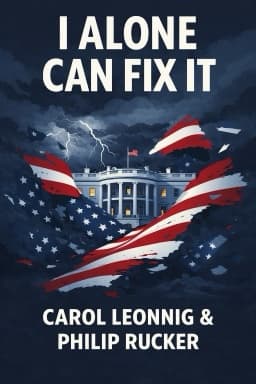
Inside the Chaos: What 'I Alone Can Fix It' Reveals About Trump’s Final Year
Unmasking Leadership, Loyalty, and the Tumult of a Presidency in Crisis

Few books have captured the storm at the center of American politics quite like Carol Leonnig and Philip Rucker’s I Alone Can Fix It. Drawing on hundreds of hours of interviews—including exclusive conversations with Donald Trump himself—the authors deliver a front-row seat to the most consequential and controversial year of his presidency. The narrative unfolds with cinematic urgency, immersing readers in a West Wing where loyalty trumps expertise, and every day brings a new crisis.
At the heart of the book is the story of a leader who, according to the authors, saw the presidency less as a public trust and more as a personal fiefdom. Loyalty was the currency of survival. Seasoned officials and cabinet members were routinely replaced by those willing to echo Trump’s views, regardless of expertise. This revolving door culture bred anxiety and stifled honest feedback, as even the most senior advisors feared the next public humiliation or abrupt dismissal.
Leonnig and Rucker meticulously document the administration’s response to the COVID-19 pandemic. Early warnings from scientists and international counterparts went unheeded, as the president and his inner circle downplayed the threat to preserve public calm and economic stability. The result: precious weeks lost, mixed messages to the public, and a patchwork of policies that left states and citizens to fend for themselves. The book’s revelations about the sidelining of public health experts and the manipulation of messaging offer a sobering lesson on the cost of putting politics before science.
But the chaos was not confined to pandemic response. The book delves into the aftermath of impeachment, the summer of protests, and the 2020 election. It chronicles the removal of dissenters, the rise of 'deep state' rhetoric, and the relentless search for scapegoats. Yet, amid the turmoil, the authors highlight moments of institutional resistance. Military leaders, judges, and public health officials repeatedly refused to cross ethical lines, demonstrating the enduring power of conscience and the resilience of American democracy.
As the nation lurched toward the 2020 election, the book captures the tension, misinformation, and legal battles that defined the final months of Trump’s presidency. Through it all, Leonnig and Rucker argue, the institutions of democracy bent but did not break. The story is ultimately one of hope: a reminder that, even in the darkest times, the courage of individuals and the strength of democratic norms can steer a nation away from the brink.
Conclusion: I Alone Can Fix It is more than a chronicle of chaos; it is a cautionary tale about the dangers of unchecked power and the enduring promise of American democracy. With insights drawn from top reviews and current analysis, this blog unpacks the book’s most important lessons for readers seeking to understand—and learn from—one of the most extraordinary periods in modern American history.
Sources: Kirkus Reviews, NPR, Goodreads, Medium
Want to explore more insights from this book?
Read the full book summary