
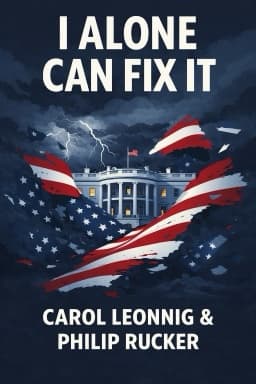
The Leadership Lessons (and Warnings) Hidden in 'I Alone Can Fix It'
What Every Leader Can Learn—And Should Fear—From the Trump White House

Leadership in times of crisis reveals character—and nowhere is this more evident than in the pages of I Alone Can Fix It. Through the lens of Donald Trump’s final year, the book offers a case study in both the perils and possibilities of leadership. At its core, the story is a warning about the dangers of prioritizing personal loyalty over competence, of governing through chaos rather than collaboration.
For leaders in any field, the book’s lessons are clear: surround yourself with people who will tell you the truth, not just what you want to hear. Value expertise and dissent, for it is only through honest debate that the best decisions are made. The White House’s culture of fear and retaliation, as described by Leonnig and Rucker, is a cautionary tale about what happens when integrity is sacrificed for expediency.
Yet, the book also highlights the power of conscience. The moments when military leaders, judges, and public health officials refused to cross ethical lines are reminders that leadership is ultimately about service—to principle, to country, to others. These 'guardrails' are what kept the nation from veering off course.
In the end, I Alone Can Fix It is both a warning and a call to action. For anyone seeking to lead with integrity, its lessons are as urgent as ever.
Sources: Kirkus Reviews, Medium, NPR
Want to explore more insights from this book?
Read the full book summary