
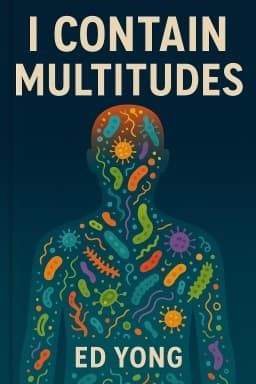
You Won’t Believe What Lives Inside You: The Hidden Microbial Universe Shaping Your Life!
Discover the invisible multitudes within us that redefine what it means to be human.
Imagine a bustling metropolis, teeming with life, activity, and complexity — but this city is inside you. Trillions of microbes, including bacteria, archaea, fungi, and viruses, inhabit our bodies, outnumbering human cells and forming intricate ecosystems that influence every aspect of our biology. This invisible world challenges long-held notions of individuality and reveals that we are more 'we' than 'me'.
These microbial communities are not uniform; each organ and body site hosts a distinct consortium of microbes adapted to their environment. For example, the gut microbiome is a dense and diverse ecosystem crucial for digestion, vitamin production, and immune education. Meanwhile, skin microbes protect against pathogens and help regulate inflammation.
Recent advances in molecular biology, such as 16S rRNA gene sequencing and metagenomics, have revolutionized our understanding, revealing a vast diversity of microbes that cannot be cultured in labs. This has led to the recognition of the microbiome as a 'hidden organ' vital to health.
Furthermore, microbes influence development and behavior. The Hawaiian bobtail squid’s light organ matures only when colonized by specific bacteria, while bacterial signals induce multicellularity in choanoflagellates, hinting at the evolutionary origins of complex life. Microbes also train our immune system, teaching it to distinguish friend from foe and preventing autoimmune diseases.
Microbial metabolites serve as chemical messengers, shaping social behaviors in animals through scent and communication. For instance, spotted hyenas rely on bacterial odors for clan recognition, and human body odor is partly shaped by skin bacteria.
Yet, this relationship is a delicate dance of cooperation and conflict. Symbiotic microbes can become parasitic, manipulating host reproduction or evolving dependence through genome reduction. The origin of eukaryotic cells itself was a microbial merger, a unique event that enabled complex life.
Understanding our microbial selves opens new frontiers in medicine, from fecal microbiota transplantation to engineered probiotics, promising treatments that harness microbial power for healing and wellbeing. It also urges a holistic view of health, ecology, and evolution, recognizing the interconnectedness of all life.
In embracing this microbial universe within us, we not only gain insights into biology but also a deeper appreciation for the complexity and wonder of life itself.
Explore more about these fascinating discoveries and their implications for our future health and identity in this comprehensive journey into the microbial world.
Want to explore more insights from this book?
Read the full book summary