
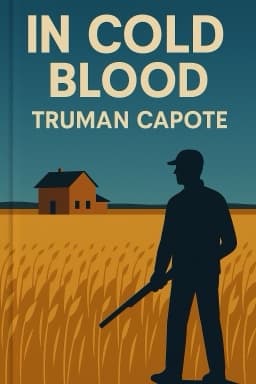
Behind the Scenes of ‘In Cold Blood’: The Making of a True Crime Classic
The Untold Story of How Truman Capote Crafted a Masterpiece

Truman Capote’s creation of In Cold Blood was an unprecedented literary endeavor that combined exhaustive research with narrative flair. Traveling to Holcomb, Kansas, Capote, accompanied by his close friend Harper Lee, immersed himself in the community, interviewing residents, law enforcement, and even the convicted murderers.
The process was not without controversy or emotional strain. Capote grappled with ethical challenges, balancing journalistic integrity with storytelling needs, and faced criticism over his relationships with the subjects. His portrayal of Perry Smith and Richard Hickock humanized them but also raised questions about objectivity and empathy.
The resulting work was a pioneering example of literary journalism, a genre that blends fact and narrative to create compelling, truthful stories. Capote’s meticulous attention to detail and evocative prose set a new standard for nonfiction writing.
Discover the story behind the story, and how Capote’s dedication and artistry brought a chilling crime to life in a way that continues to captivate readers and writers alike.
Want to explore more insights from this book?
Read the full book summary