
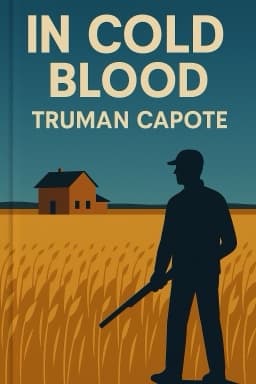
Unveiling the Dark Heart of America: The True Story Behind ‘In Cold Blood’
How a Small Kansas Town’s Tragedy Changed Crime Reporting Forever

In the vast, open plains of western Kansas lies a small town named Holcomb, a place where life once moved with the quiet certainty of the seasons. But in 1959, this peaceful community was shattered by a brutal crime that would reverberate across the nation. Truman Capote’s In Cold Blood tells the story of the Clutter family murders, a true crime that exposed the fragility of safety and the complexity of human nature.
Capote’s narrative nonfiction style merges the precision of journalism with the emotional depth of novelistic storytelling. This approach allows readers to step inside the lives of the victims and perpetrators alike, understanding their hopes, fears, and contradictions. The Clutter family, emblematic of American rural prosperity and values, were suddenly victims of a violence that seemed unimaginable in their world.
The two men responsible, Perry Smith and Richard Hickock, are portrayed not as mere villains but as complex individuals shaped by trauma, ambition, and flawed humanity. Their backgrounds—marked by hardship, failed dreams, and emotional scars—invite readers to grapple with the question of what drives people to commit such acts. The chilling precision of the crime, the methodical investigation, and the emotional upheaval of the trial all unfold with a haunting clarity that remains unmatched in true crime literature.
Moreover, the book challenges assumptions about rural America, revealing that beneath the peaceful surface lie tensions and vulnerabilities. It also sparked debates about justice, particularly capital punishment, and the role of mental health in criminal behavior. The story's cultural impact extends beyond literature into societal reflections on crime and community.
Ultimately, In Cold Blood is a meditation on the human condition—on innocence lost, the search for meaning amid chaos, and the enduring power of storytelling to illuminate the darkest corners of our world.
Explore this riveting tale with us as we uncover the layers of tragedy, justice, and humanity that make In Cold Blood a timeless classic.
Want to explore more insights from this book?
Read the full book summary