
Why Rushing is Killing You: The Hidden Dangers of Our Speed-Obsessed Culture
Discover how our obsession with speed harms our minds and bodies — and why slowing down might just save your life.

Imagine waking up to a world where every second counts, where clocks dictate your every move, and the pressure to do more faster never lets up. This is the reality for billions today, caught in the relentless rush of modern life.
Historically, the invention of mechanical clocks and the Industrial Revolution transformed how humans perceive and measure time. Natural rhythms gave way to rigid schedules, and the value of a moment was reduced to its productivity. This shift birthed what experts now call 'time-sickness' — an anxiety that there is never enough time, pushing people to hurry endlessly.
The consequences are dire. In Japan, the tragic phenomenon 'karoshi'—death by overwork—reveals the extreme toll of this culture. Meanwhile, the average American sleeps 90 minutes less per night than a century ago, contributing to accidents, weakened immunity, and mental health struggles.
Beyond physical health, the speed culture fractures social bonds. People rush through meals, conversations, and relationships, losing depth and connection. Technology, ironically designed to save time, often adds new layers of demand, making us busier than ever.
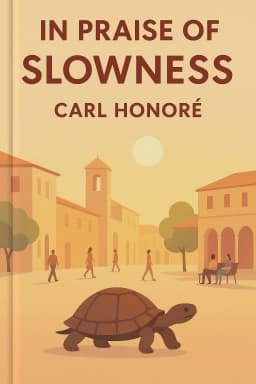
Yet, within this crisis lies hope. The Slow Movement, emerging globally, challenges the cult of speed by advocating for balance, mindfulness, and quality over quantity. It invites us to rediscover the joy of presence, to savor moments fully rather than skim their surfaces.
This blog will guide you through understanding the roots of our speed obsession, its hidden costs, and the transformative power of slowing down. Prepare to rethink your relationship with time and find a healthier, more fulfilling rhythm for life.
Want to explore more insights from this book?
Read the full book summary