
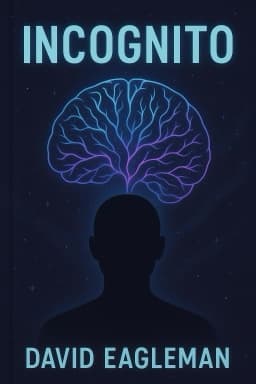
Unlocking Your Hidden Mind: The Shocking Truth About What Your Brain Is Really Doing
Discover the unseen orchestra inside your head that shapes your every thought, feeling, and action.

Imagine standing at the helm of a vast ship, believing you control every course correction, every sail adjustment. Now imagine that most of the steering is done by unseen crew members below decks, working tirelessly without your knowledge. This metaphor captures the essence of your brain's unconscious orchestration.
This hidden orchestra includes automatic decision-making, implicit memories, and emotional responses that influence your daily life. For example, studies show that men find women’s pupils dilated more attractive, yet they are unaware of why; their brains register unconscious biological signals that guide preferences.
Perception, often trusted as an accurate reflection of reality, is itself a constructed narrative. Your brain actively fills in blind spots, filters peripheral vision, and can be fooled by illusions like change blindness, where large changes go unnoticed without focused attention. This selective processing means that what you see is less a window to the world and more a story your brain tells.
Moreover, your brain is not a single unified self but a team of rivals—multiple neural systems competing and cooperating to influence your behavior. Split-brain studies reveal that your left and right hemispheres can harbor different intentions, challenging the idea of a singular 'I'. Emotional impulses often wrestle with rational deliberations, creating internal conflicts that shape your decisions.
Consciousness plays a unique role as a trainer and planner, setting goals and automating complex skills like riding a bike or playing tennis. Overthinking these automated actions can disrupt performance, illustrating the delicate balance between conscious control and unconscious execution.
Our mental universe is bounded by evolutionary and neural constraints. Humans perceive only a tiny sliver of the electromagnetic spectrum, and many thoughts remain unthinkable because they do not fit within our brain’s architecture.
Understanding these hidden processes invites humility and compassion. We are passengers, not captains, of our brains’ vast operations. Yet this realization also empowers us with hope—neuroplasticity allows change, healing, and growth.
By embracing the incognito nature of our minds, we open doors to deeper self-awareness and a richer understanding of others. This journey transforms how we view free will, responsibility, and the very essence of what it means to be human.
For those fascinated by the brain’s mysteries, this exploration is just the beginning. Dive deeper into the science of consciousness and discover the remarkable machinery within.
Want to explore more insights from this book?
Read the full book summary