
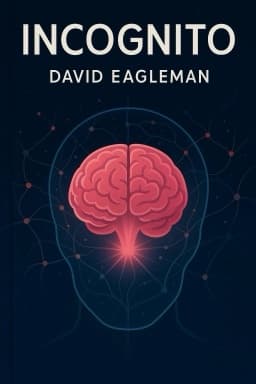
Unlocking the Hidden Orchestra: How Your Brain Controls You Without You Knowing
Discover the astonishing truth about your brain's secret workings and how much of your mind operates beyond your awareness.
Imagine waking up each day believing you are the full master of your thoughts, feelings, and actions. Yet beneath this comforting illusion lies a vast, humming universe of neural activity that shapes your every move without your awareness.
One striking example comes from studies on attraction: men shown photographs of women with dilated pupils consistently found them more attractive, though none consciously noticed the pupil size. This unconscious preference reveals how evolution has wired our brains to respond to subtle cues beneath our awareness. Similarly, our brain fills in large blind spots in vision — areas with no photoreceptors — so seamlessly that we never perceive gaps in what we see. This active construction of perception means what we experience as reality is a crafted narrative, not a direct recording.
Our implicit memory also holds secrets: patients with amnesia who cannot form new explicit memories still learn and improve at tasks like video games, illustrating that much learning happens without conscious recall. Expert chicken sexers can rapidly classify chick genders without knowing how, showing unconscious expertise at work.
These discoveries challenge the traditional view of a singular, conscious self in control. Instead, the brain is a team of rivals — competing and cooperating systems that negotiate our choices and impulses. Like Ulysses binding himself to resist temptation, we use strategies to manage these internal conflicts and exert self-control.
Understanding this hidden orchestra invites humility and wonder, inspiring us to explore deeper questions about free will, responsibility, and identity. As science advances, we learn that the self is a complex mosaic shaped by genes, environment, and unconscious processes, expanding our appreciation for the mystery within.
Stay tuned as we journey further into how perception deceives us, how unconscious learning shapes behavior, and how neuroscience reshapes our understanding of the human mind and future.
For more on how magic tricks reveal the brain’s control over perception, see the fascinating research in New Scientist. The study of visual masking and illusions further illuminates how much remains unseen by our conscious eye. These insights from cognitive science continue to revolutionize our understanding of reality itself. 1 2 3
Want to explore more insights from this book?
Read the full book summary