
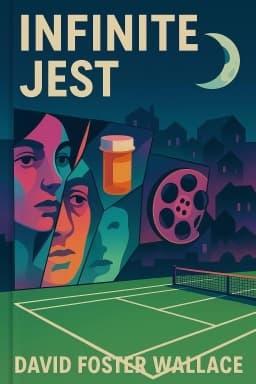
How Infinite Jest Predicted Our Entertainment-Obsessed Society
Why Wallace’s vision of addictive entertainment is more relevant than ever in the age of streaming and smartphones.

When David Foster Wallace wrote Infinite Jest in the mid-1990s, he imagined a future where entertainment was so powerful it could literally paralyze its audience. Today, with streaming platforms, social media, and smartphones, his vision seems less like satire and more like prophecy.
The Entertainment: A Mirror for Modern Media
In the novel, ‘The Entertainment’ is a film so irresistibly pleasurable that viewers lose all motivation for anything else. It’s a chilling metaphor for the addictive potential of media, echoing today’s concerns about binge-watching, doomscrolling, and digital escapism. 1
Binge-Watching and Digital Distraction
The rise of streaming services has made it possible to consume content endlessly. Like the characters in Infinite Jest, many of us struggle to tear ourselves away from the screen—even when it impacts our health, relationships, or work.
Isolation in the Age of Connection
Despite being more ‘connected’ than ever, studies show that media overuse can increase feelings of loneliness and isolation—a central theme in Wallace’s novel. The characters’ search for meaning amid distraction is more relevant than ever. 3
The Loss of Agency
Infinite Jest warns that unchecked pleasure can erode our willpower and autonomy. Today, algorithms and targeted content can keep us scrolling or watching, even when we want to stop. 4
Finding Meaning Beyond the Screen
Wallace’s work challenges us to seek fulfillment not in endless distraction, but in genuine connection and mindful engagement. The novel’s message is clear: entertainment can soothe, but it can also ensnare. The choice is ours. 1
As we navigate the digital age, Infinite Jest offers a roadmap—both a warning and a hope—that we can reclaim our lives from the screens and rediscover what truly matters.
Want to explore more insights from this book?
Read the full book summary