
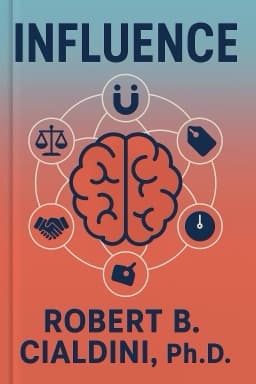
6 Psychological Hacks That Make You Say YES Without Realizing It
Unveil the covert psychological tricks that marketers, salespeople, and influencers use to get your agreement.

From free samples to catchy slogans, subtle psychological tricks surround us, influencing our decisions often without our awareness. Robert Cialdini’s research into the psychology of persuasion reveals six powerful hacks that explain why we comply so readily.
1. The Magic of Reciprocation
Imagine you’re at a copy machine, and someone asks, "May I cut in line because I need to make copies?" Studies show that even when the reason is trivial or nonsensical, the word "because" dramatically increases compliance. This is because "because" triggers an automatic response to reciprocate, a deep-rooted social norm that compels us to repay favors and kindness.
2. Commitment and Consistency
Once we commit to something, we strive to act consistently with that commitment. This is why signing a small petition can lead to larger donations later. Our desire to appear rational and reliable pushes us to honor our previous promises, even when circumstances change.
3. Social Proof
Ever laugh more at a joke when others are laughing? That’s social proof at work. We look to others to gauge appropriate behavior, especially in uncertain situations. However, this can backfire, as in the bystander effect, where people fail to act in emergencies because everyone else is passive.
4. The Liking Principle
We say "yes" more often to people we like. Similarity, compliments, and cooperation increase liking. This is why salespeople try to build rapport before making a pitch. Even superficial connections can boost compliance.
5. Authority
Uniforms, titles, and credentials command automatic respect and obedience. Even fake authorities can exploit this, as seen in scams where imposters pose as officials. Blind obedience can lead to harmful outcomes, so critical thinking is essential.
6. Scarcity
Limited availability makes things more attractive. Scarcity triggers psychological reactance, motivating us to reclaim lost freedoms. This explains the rush to buy "limited edition" items or respond to "last chance" offers.
By understanding these hacks, you can protect yourself from unwanted influence and use persuasion ethically to build genuine connections and trust.
Awareness is your greatest defense. The next time someone tries to sway you, pause and ask: "Is this a genuine request or a psychological hack?" With knowledge comes power.
Want to explore more insights from this book?
Read the full book summary